How to export contacts in Mailchimp

Nithil Shanmugam
Nithil Shanmugam·
How to export contacts in Mailchimp

Overview:

Streamline your Mailchimp experience with our guide on exporting contacts effortlessly. Optimize workflow by organizing and categorizing your contacts with relevant tags for seamless navigation. This comprehensive guide provides step-by-step instructions on exporting contacts, ensuring efficiency and clarity in managing your email marketing campaigns within the Mailchimp platform.

Who is Mailchimp best suited for?

Mailchimp is best suited for a wide range of professionals, including Email Marketers, Small Business Owners, and E-commerce Managers. For example, Email Marketers can use Mailchimp for creating and automating email campaigns, Small Business Owners can leverage it for managing customer lists and running promotional emails, and E-commerce Managers can use it for crafting targeted marketing messages and analyzing campaign performance, all benefiting from Mailchimp’s user-friendly interface and robust marketing automation tools.

How to export contacts in Mailchimp

Interactive demo powered by Supademo

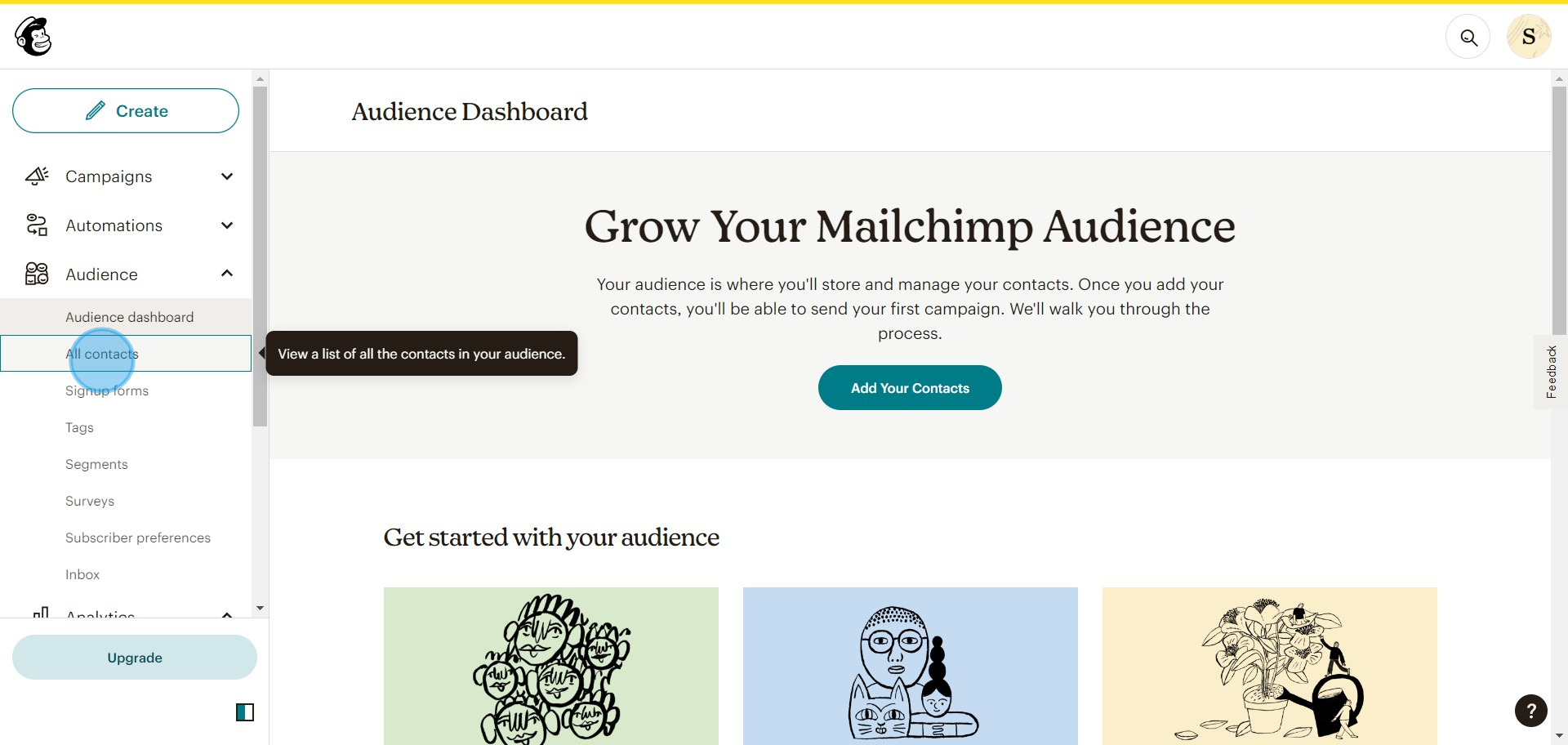
1. Start by selecting the Audience tab.
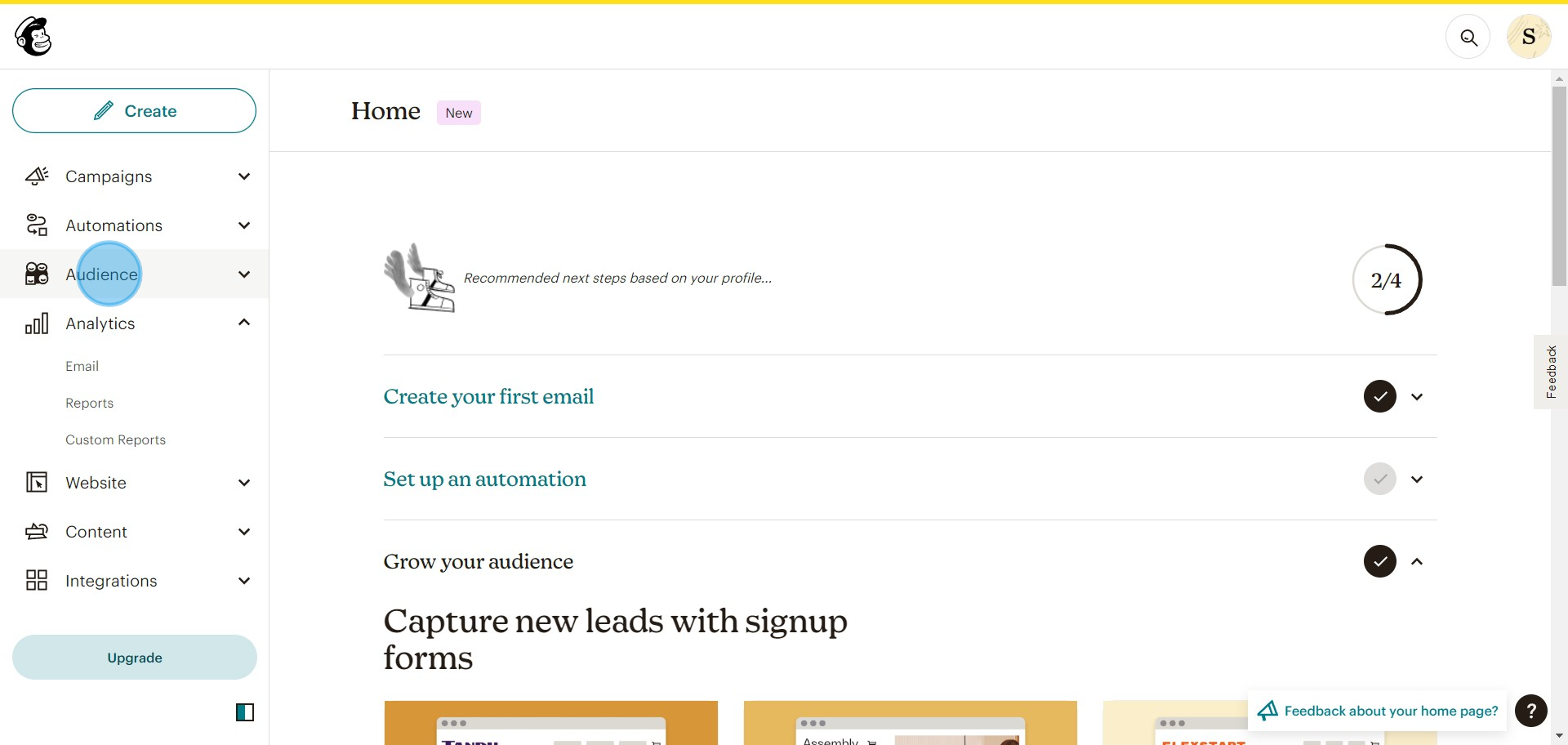
1 Click on "Audience"

2. Proceed to choose All Contacts.

2 Click on "All contacts"

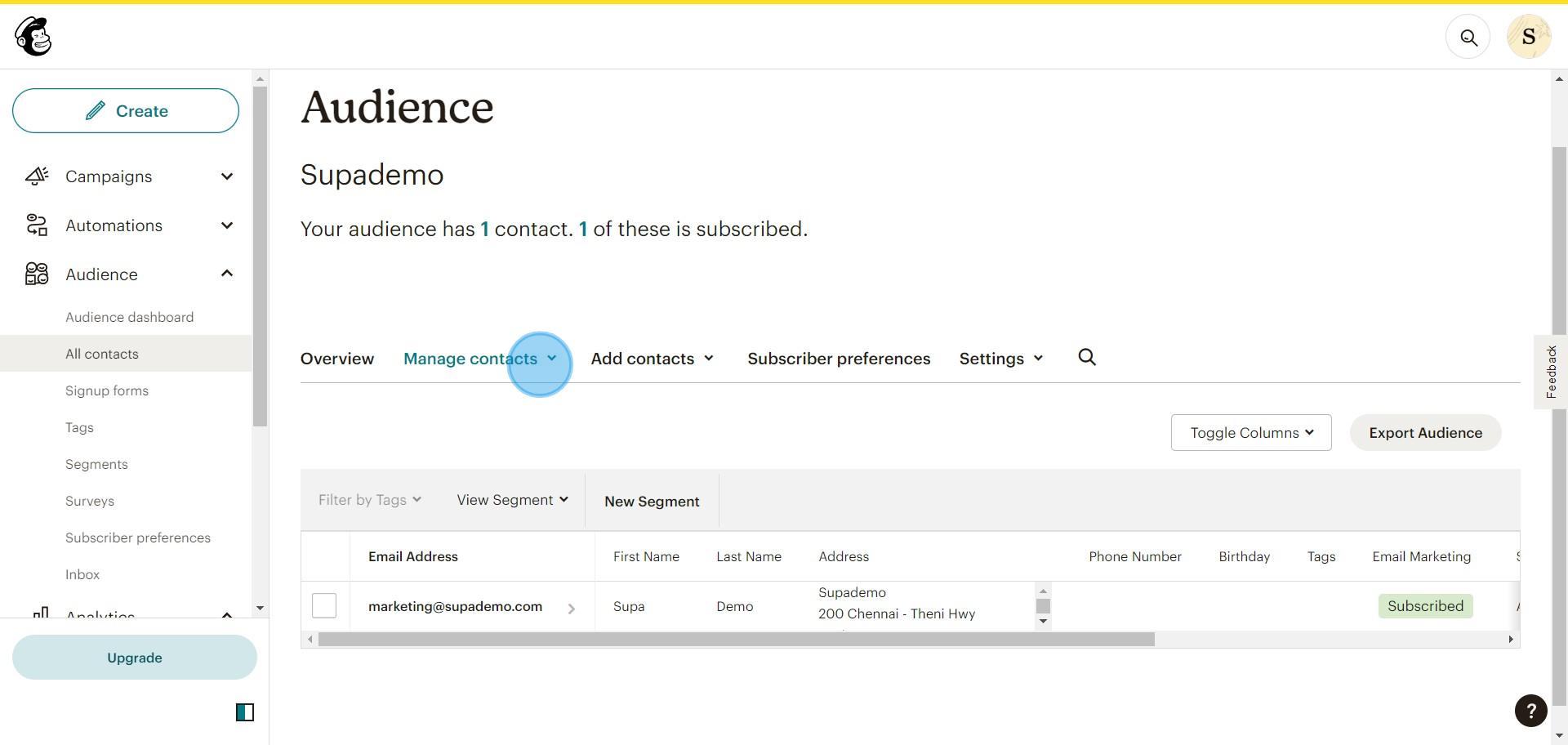
3. Next, Manage your Contacts.

3 Click here

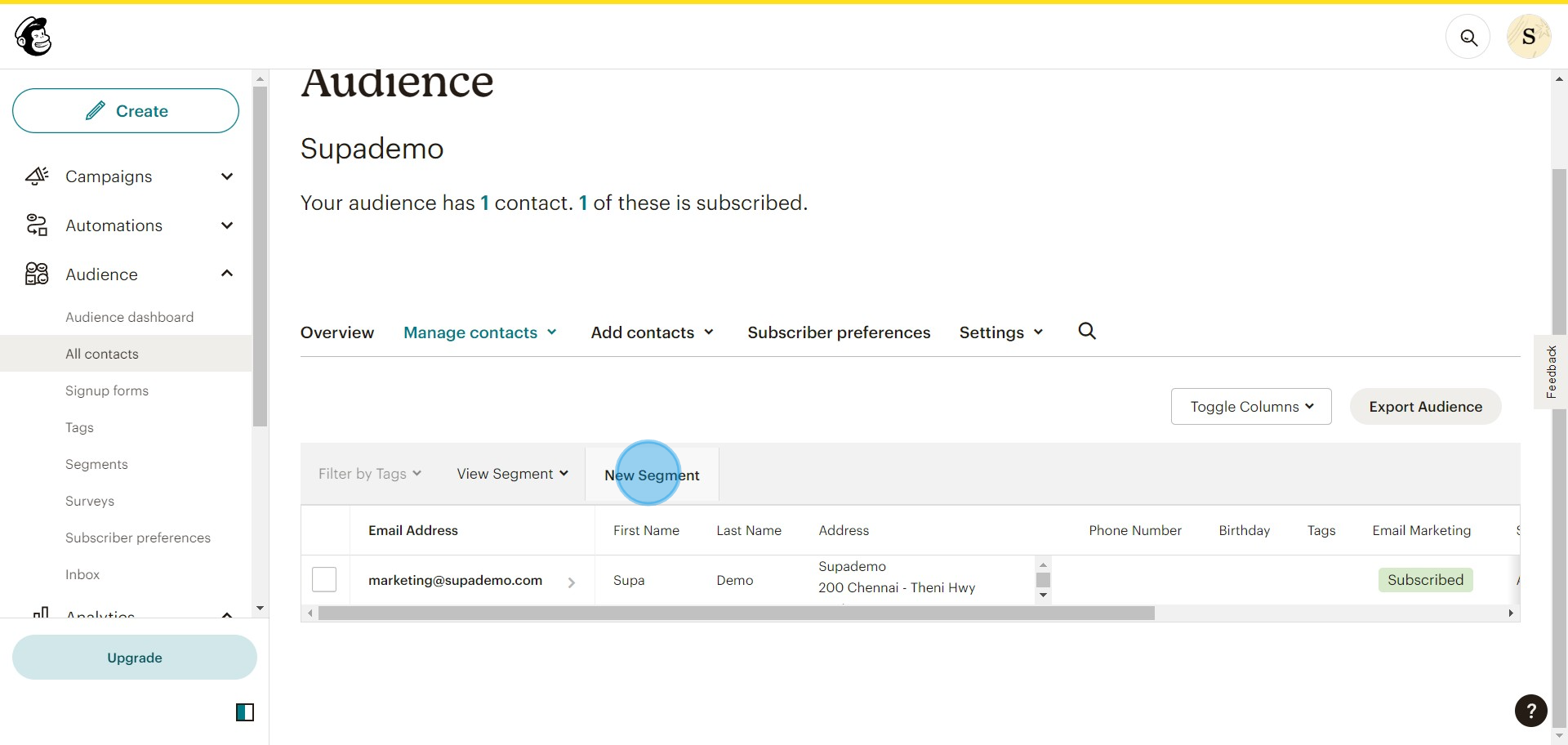
4. Begin creating a New Segment.

4 Click on "New Segment"

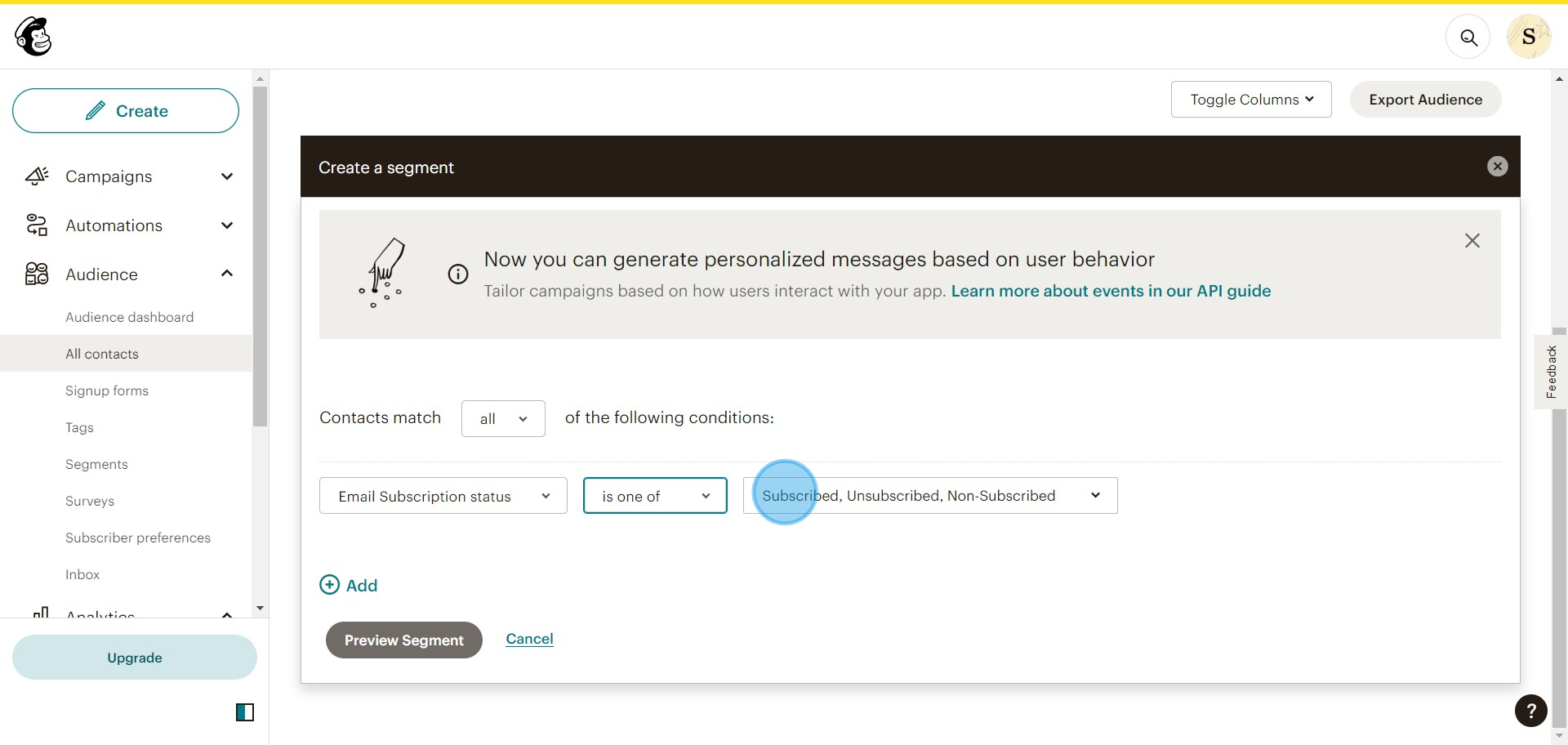
5. Choose the Contact Conditions for the export.
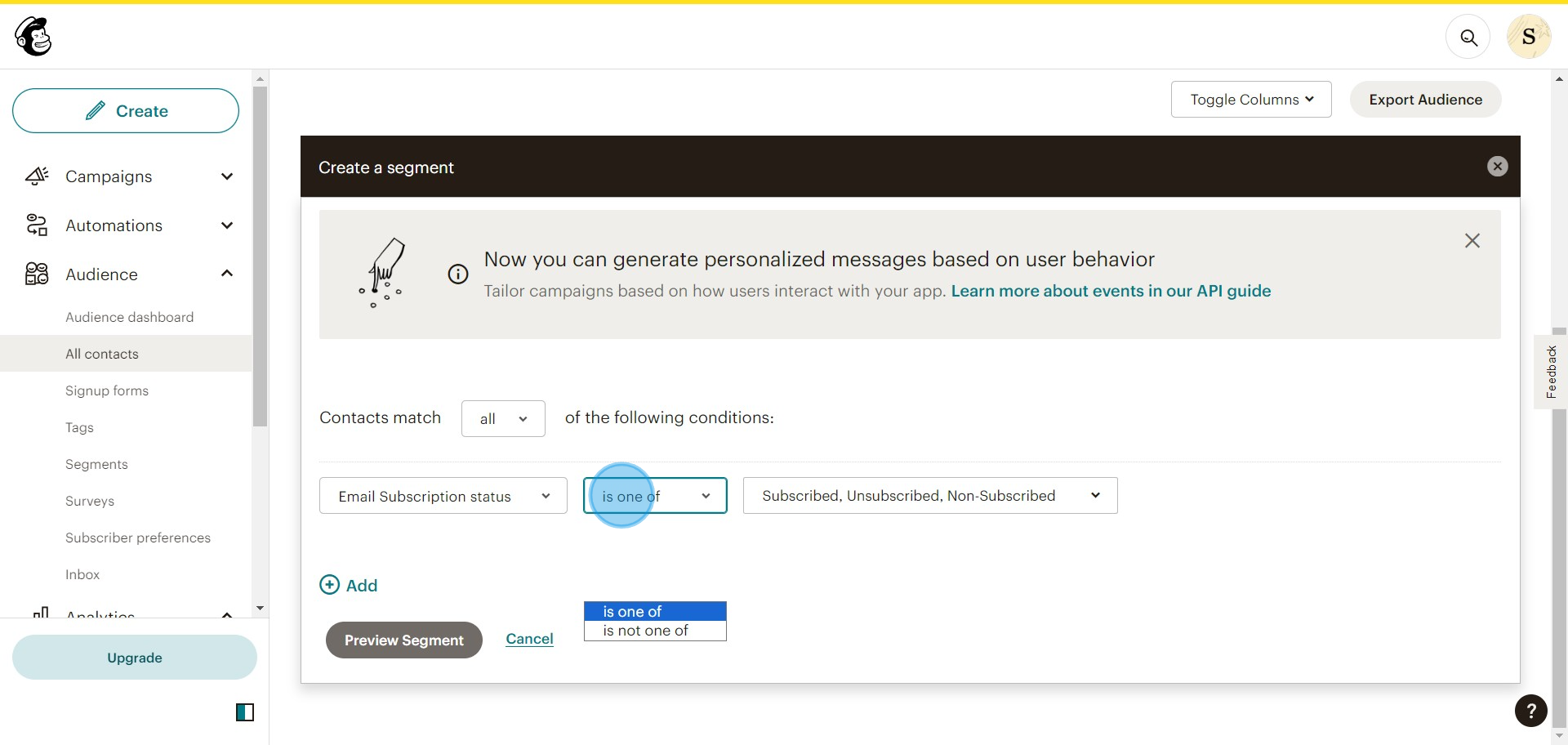
5 Click on "is one of
is not one of"

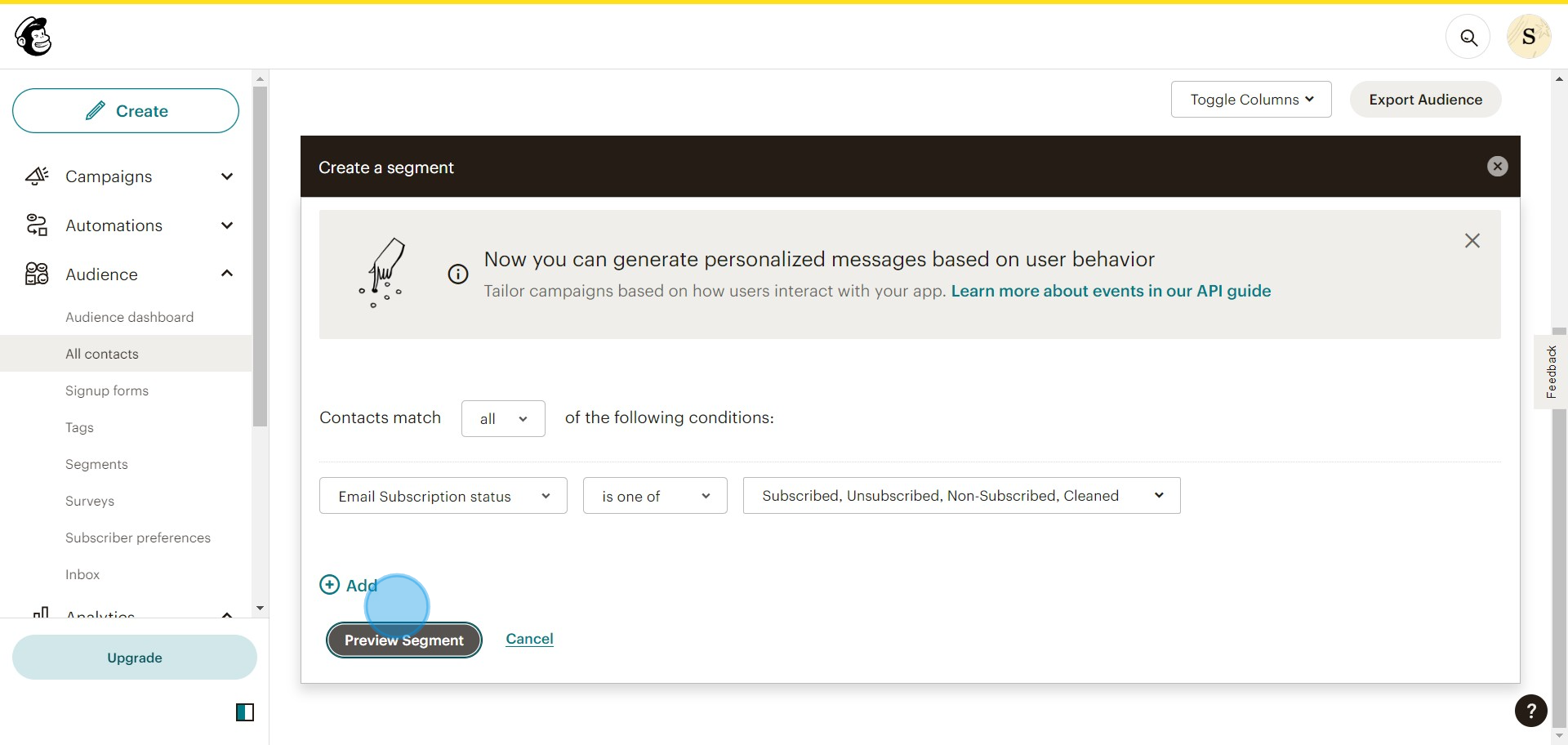
6. Select the desired Audience.

6 Click on "Subscribed, Uns..."

7. Get a Preview of your Segment.

7 Click on "Contacts match ..."

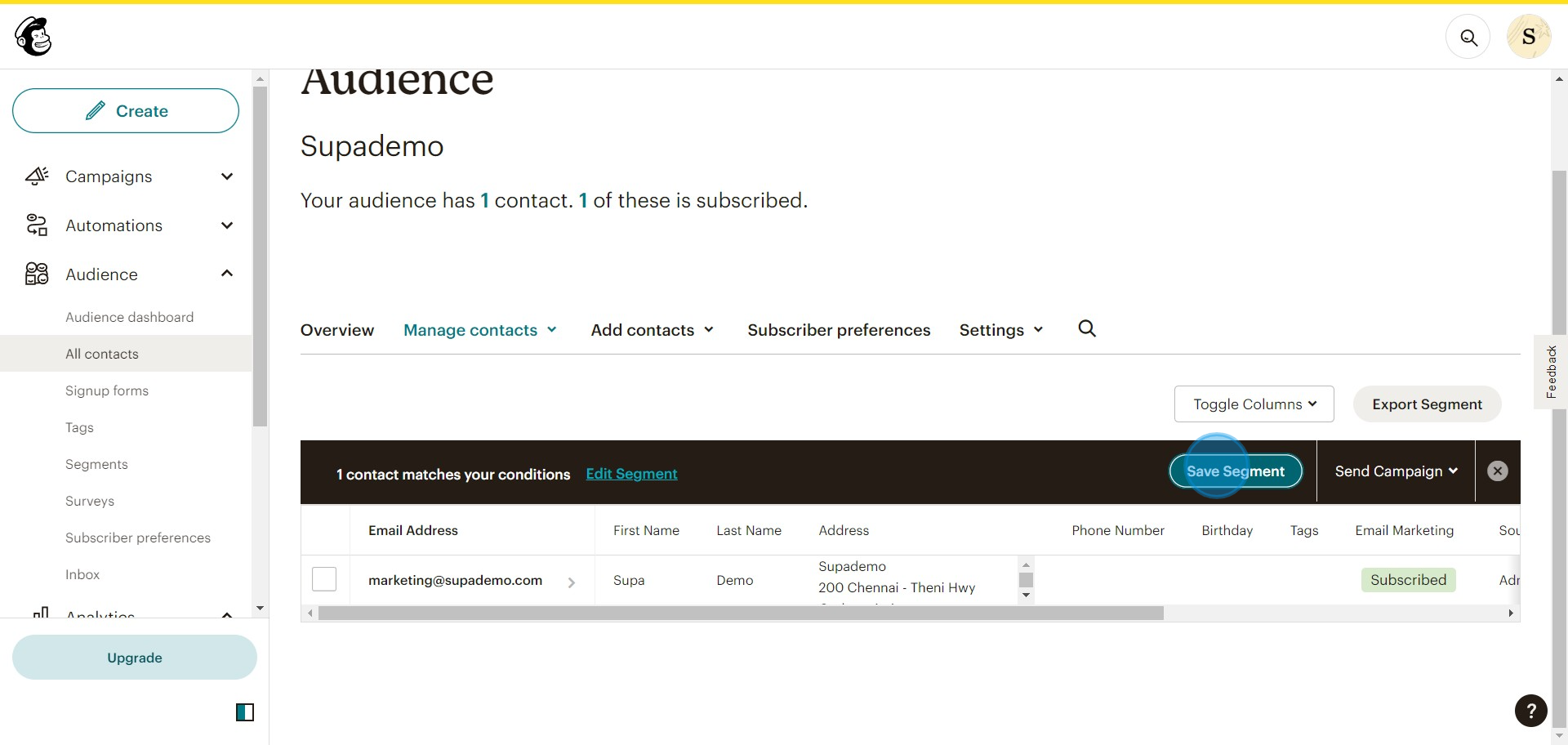
8. Save the created Segment.

8 Click on "Save Segment"

9. Name your Segment then confirm by clicking Save.
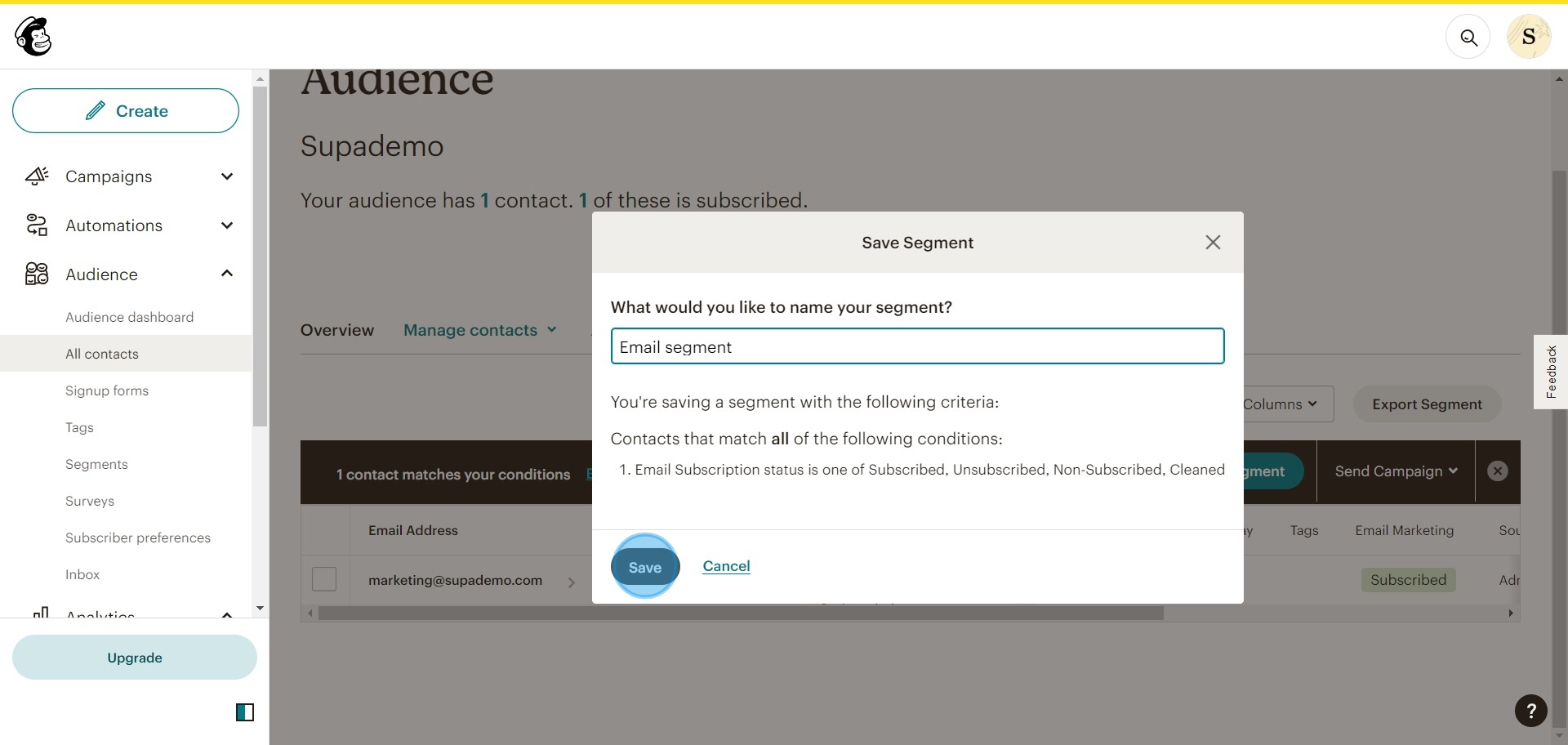
9 Click on "Save"

10. To finalize, choose Export Segment.
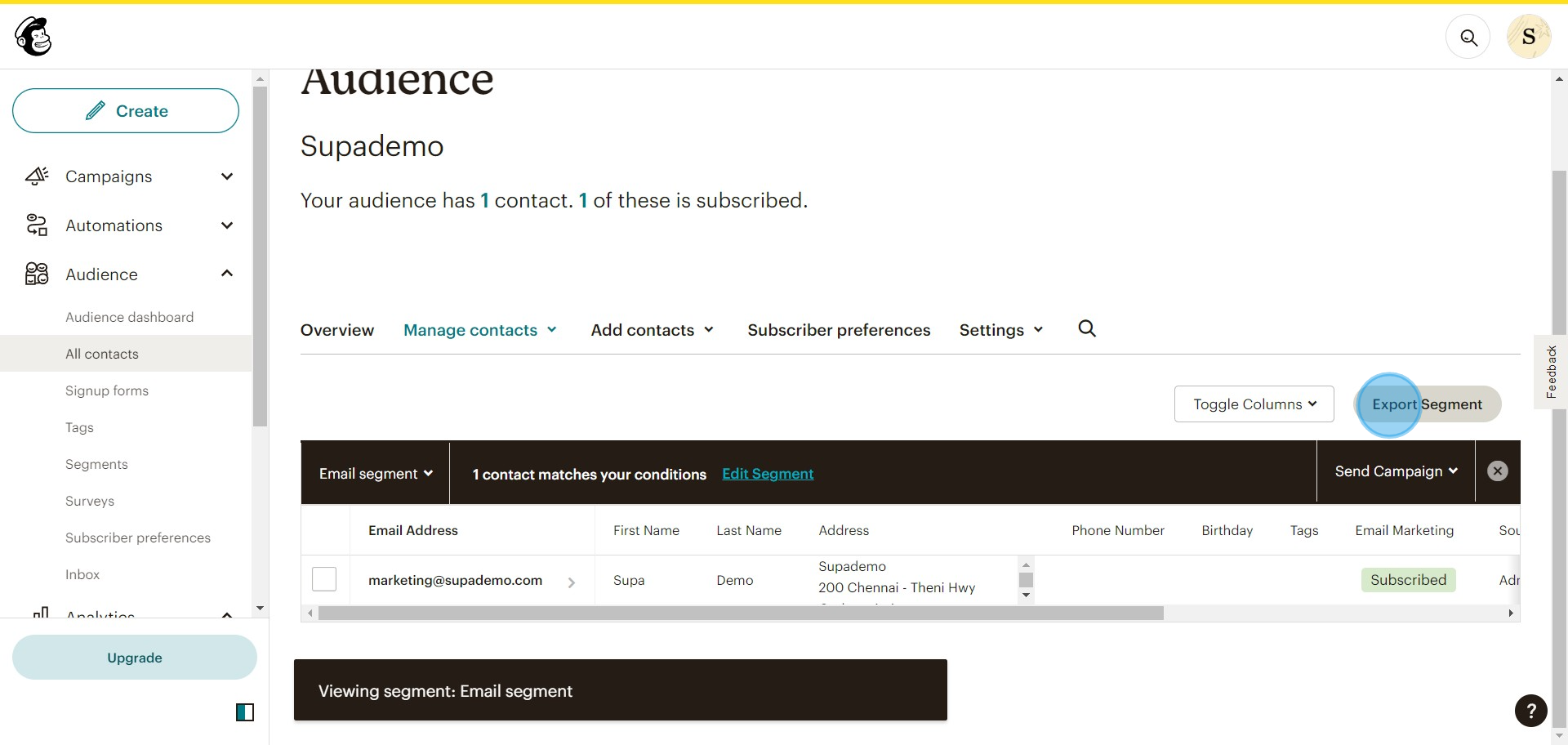
10 Click on "Export Segment"

11. Export your Contact list As CSV for download.
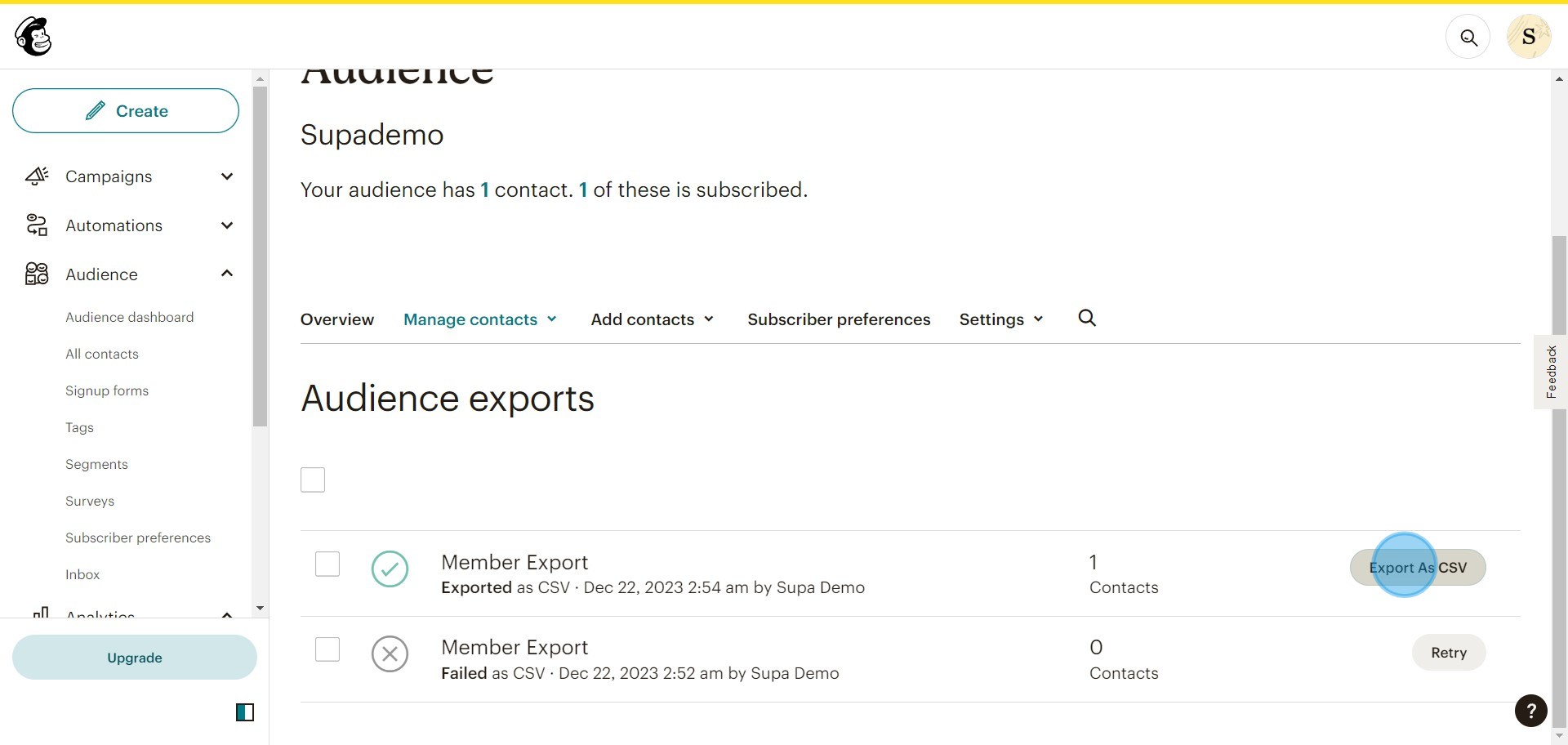
11 Click on "Export As CSV"

Common FAQs on Mailchimp

Commonly asked questions about this topic.

How do I create an email campaign in Mailchimp?

To create an email campaign, log in to your Mailchimp account and go to the “Campaigns” tab. Click on “Create Campaign” and select “Email” from the options. Choose a campaign type (e.g., Regular, Automated, or Plain-text). Enter your campaign name and click “Begin.” Follow the steps to set up your campaign, including selecting your audience, designing the email content using Mailchimp’s drag-and-drop editor or templates, and configuring campaign settings. Once you’re ready, review and send your campaign, or schedule it for later.

Can I automate email workflows in Mailchimp?

Yes, Mailchimp offers automation features for creating email workflows. Go to the “Automations” tab and click “Create Automation.” Choose a workflow type, such as “Welcome Series,” “Abandoned Cart,” or “Post-Purchase Follow-Up.” Customize the workflow by setting triggers, such as user actions or specific dates, and design the automated emails. Mailchimp will automatically send these emails based on the triggers and conditions you’ve set, helping you engage with your audience effectively.

How can I analyze the performance of my email campaigns in Mailchimp?

To analyze your email campaign performance, go to the “Campaigns” tab and select the campaign you want to review. Click on “View Report” to access detailed analytics, including open rates, click rates, bounce rates, and unsubscribe rates. Mailchimp provides graphs and metrics to help you understand how your campaign performed and offers insights into engagement patterns. Use this data to optimize future campaigns and improve your email marketing strategy.

Create your own step-by-step demo

Scale up your training and product adoption with beautiful AI-powered interactive demos and guides. Create your first Supademo in seconds for free.

Nithil Shanmugam

Nithil Shanmugam

Nithil is a startup-obsessed operator focused on growth, sales and marketing. He's passionate about wearing different hats across startups to deliver real value.

More from the blog

How to Add Products to Shopify

How to Add Products to Shopify

Learn step-by-step how to add products to your Shopify store effortlessly, including tips on product details, images, pricing, and inventory management to boost your online sales.

Vimal Kumar
Vimal KumarDec 17, 2025
How to Deactivate Your Shopify Store

How to Deactivate Your Shopify Store

Learn step-by-step how to deactivate your Shopify store easily, including important considerations and tips to pause or close your shop without losing data.

Vimal Kumar
Vimal KumarDec 17, 2025
How to Remove 'Powered by Shopify'

How to Remove 'Powered by Shopify'

Learn how to easily remove the 'Powered by Shopify' text from your online store with step-by-step instructions and tips to customize your Shopify storefront.

Vimal Kumar
Vimal KumarDec 17, 2025
How to Create a Shopify Account

How to Create a Shopify Account

Learn step-by-step how to create a Shopify account quickly and easily, set up your online store, and start selling your products in no time.

Vimal Kumar
Vimal KumarDec 17, 2025
How to Create a Stripe Account

How to Create a Stripe Account

Learn how to create a Stripe account quickly and easily with our step-by-step guide, perfect for beginners looking to start accepting online payments.

Vimal Kumar
Vimal KumarDec 17, 2025
How to Contact Stripe Support

How to Contact Stripe Support

Learn the easiest ways to contact Stripe support for quick assistance with your payment processing, account issues, and technical questions.

Vimal Kumar
Vimal KumarDec 16, 2025