How to share individual frames in Figma

Nithil Shanmugam
Nithil Shanmugam·
How to share individual frames in Figma

Overview:

Enhance your Figma workflow by efficiently sharing individual frames with this comprehensive guide. Streamline collaboration and communication by learning the seamless process of sharing specific frames, ensuring clarity and efficiency in your design projects within the Figma platform. Optimize your design management strategies and empower your team to work cohesively with this step-by-step guide on sharing individual frames in Figma.

Who is Figma best suited for?

Figma is best suited for a wide range of professionals, including UX/UI Designers, Product Managers, and Design Teams. For example, UX/UI Designers can use Figma for creating and iterating on interface designs, Product Managers can leverage it for collaborating on product prototypes and gathering feedback, and Design Teams can use it for working together in real-time on visual projects, all benefiting from Figma’s powerful design tools and collaborative capabilities.

How to share individual frames in Figma

Interactive demo powered by Supademo

1. Choose the frame you’d like to share on the canvas.
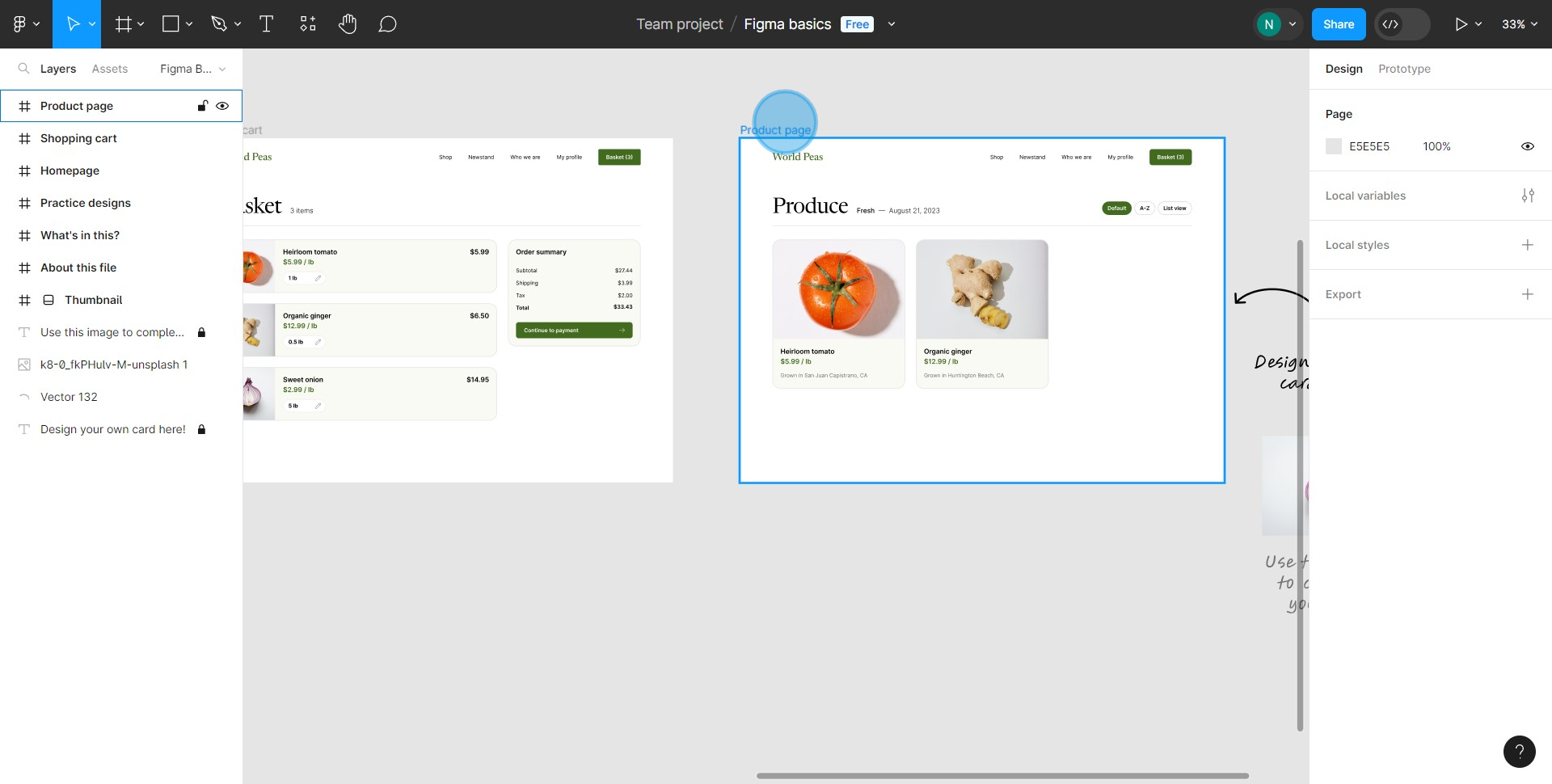
1 Click here

2. Look for the 'Share' button and give it a click.
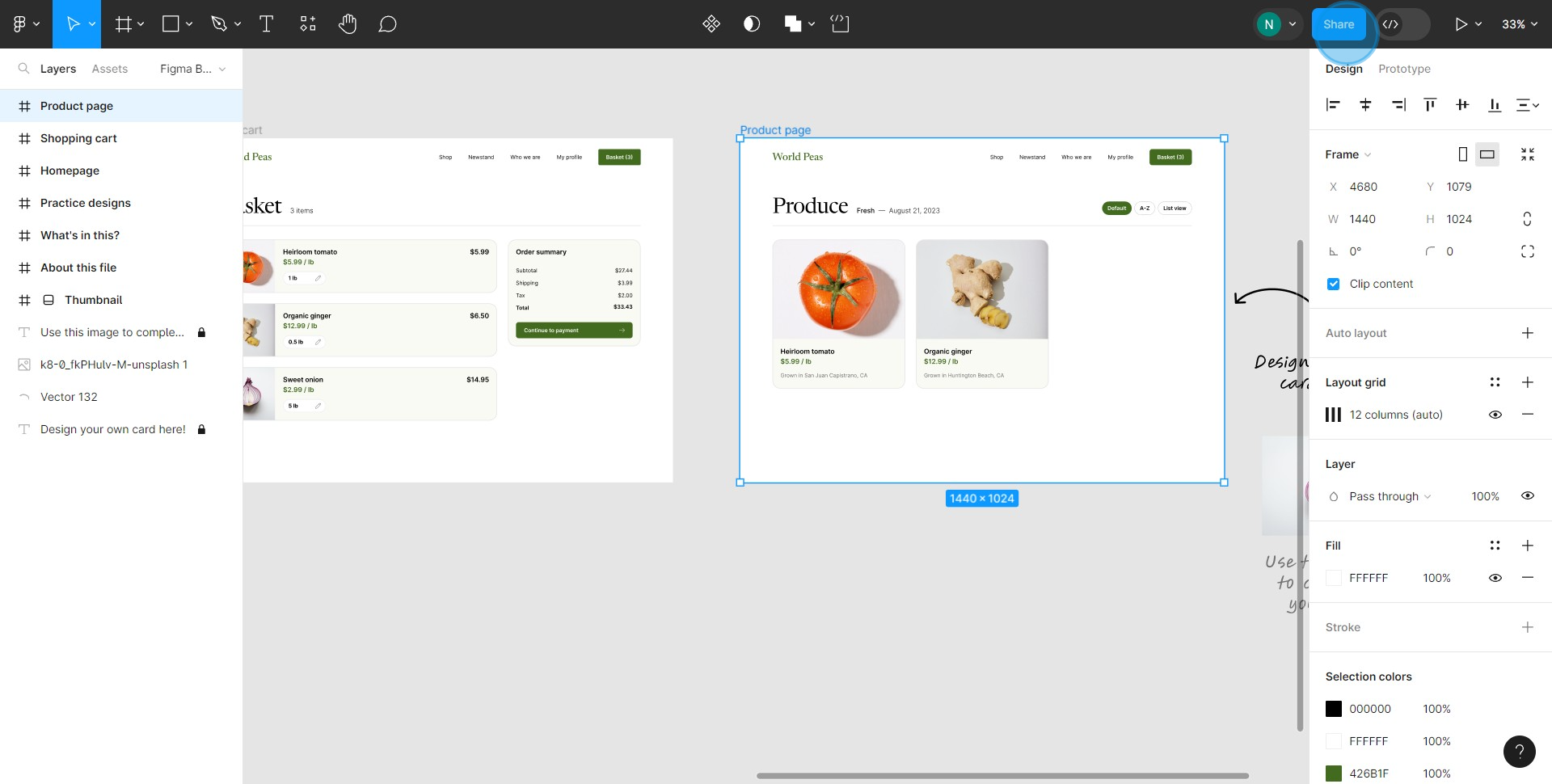
2 Click on "Share"
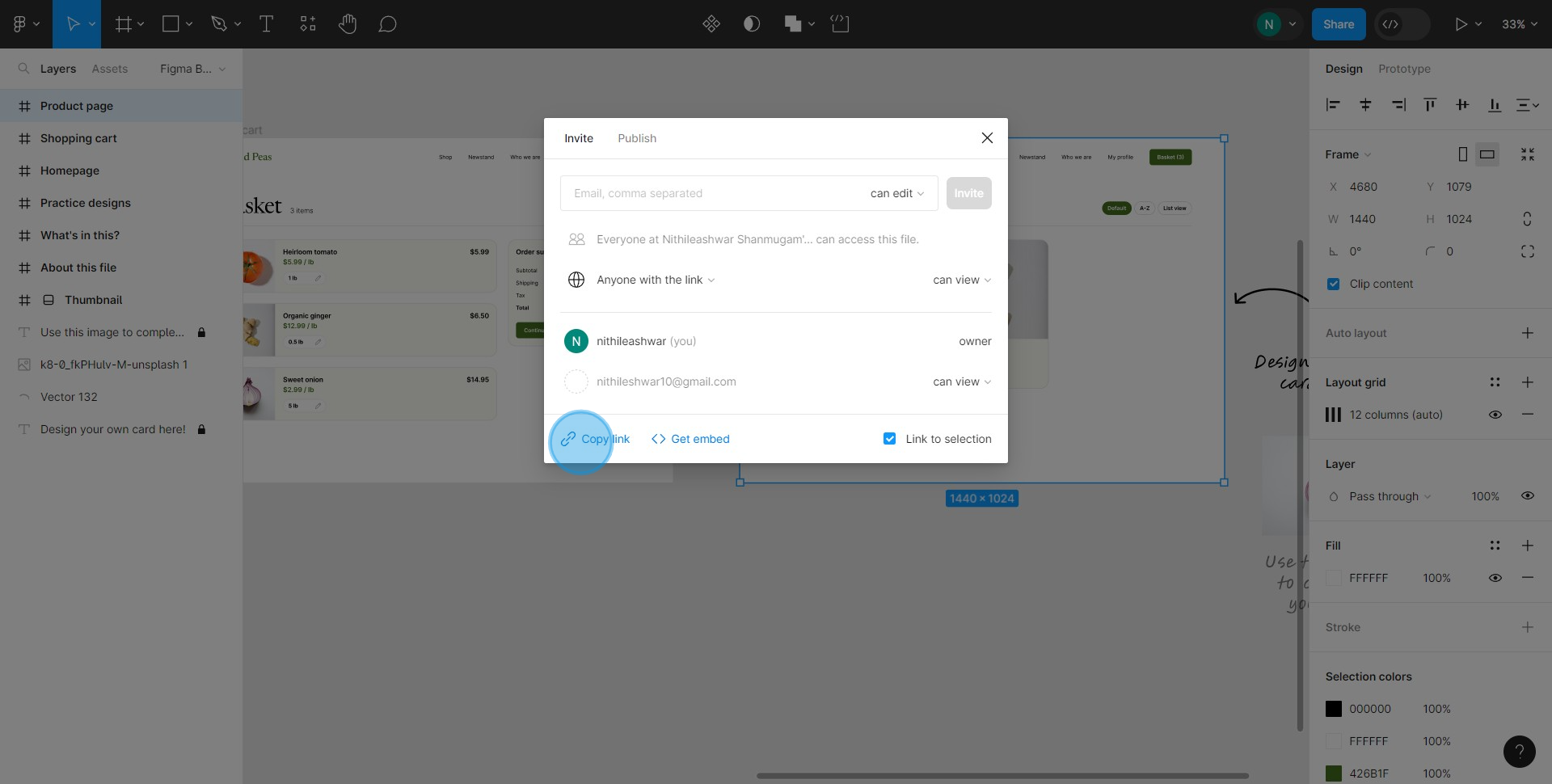
3 Click here
4 Click on "Copy link"
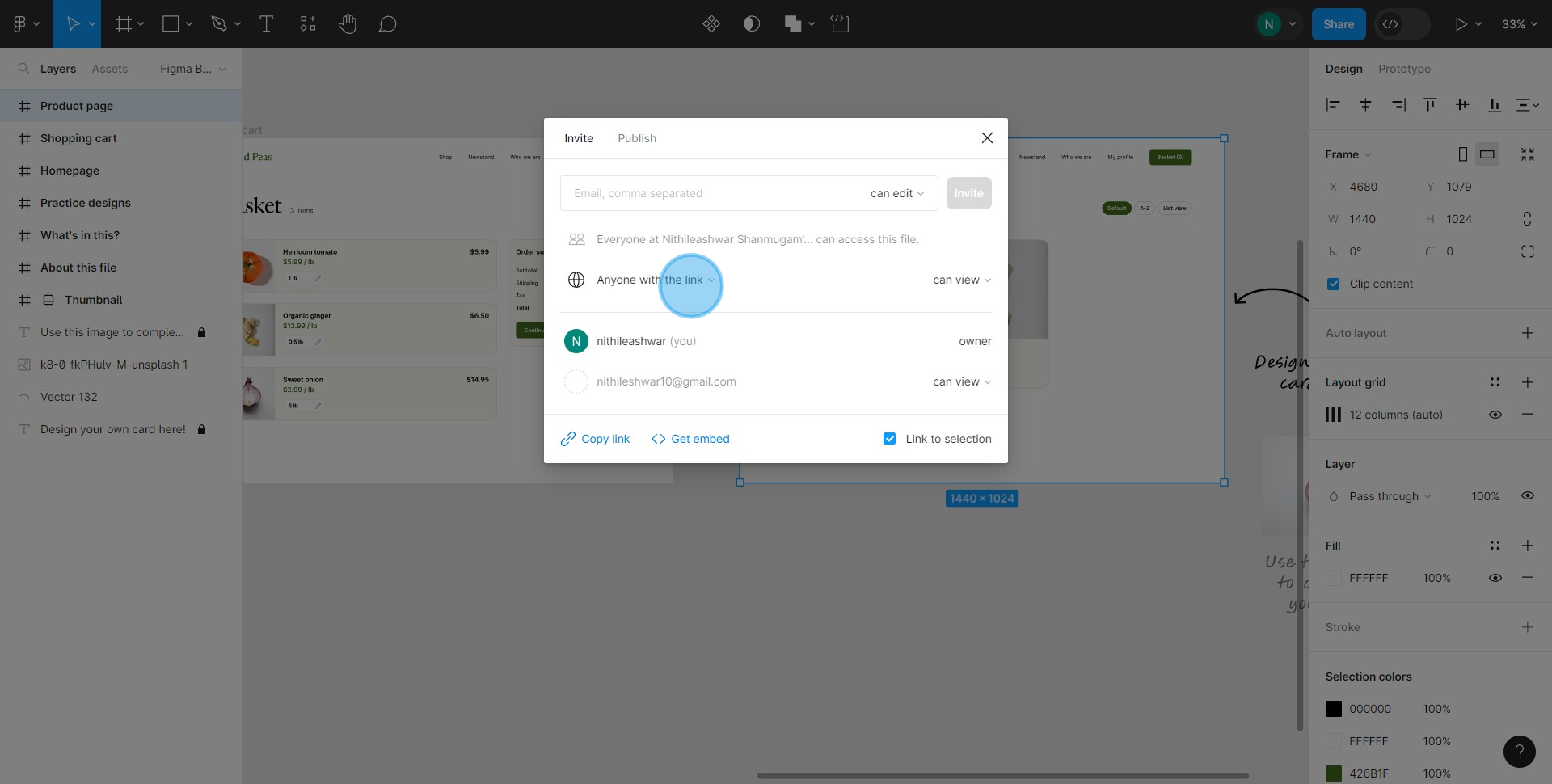
5 Click on "Anyone with the link"

6. Switch to 'Only people invited to this file' selection.
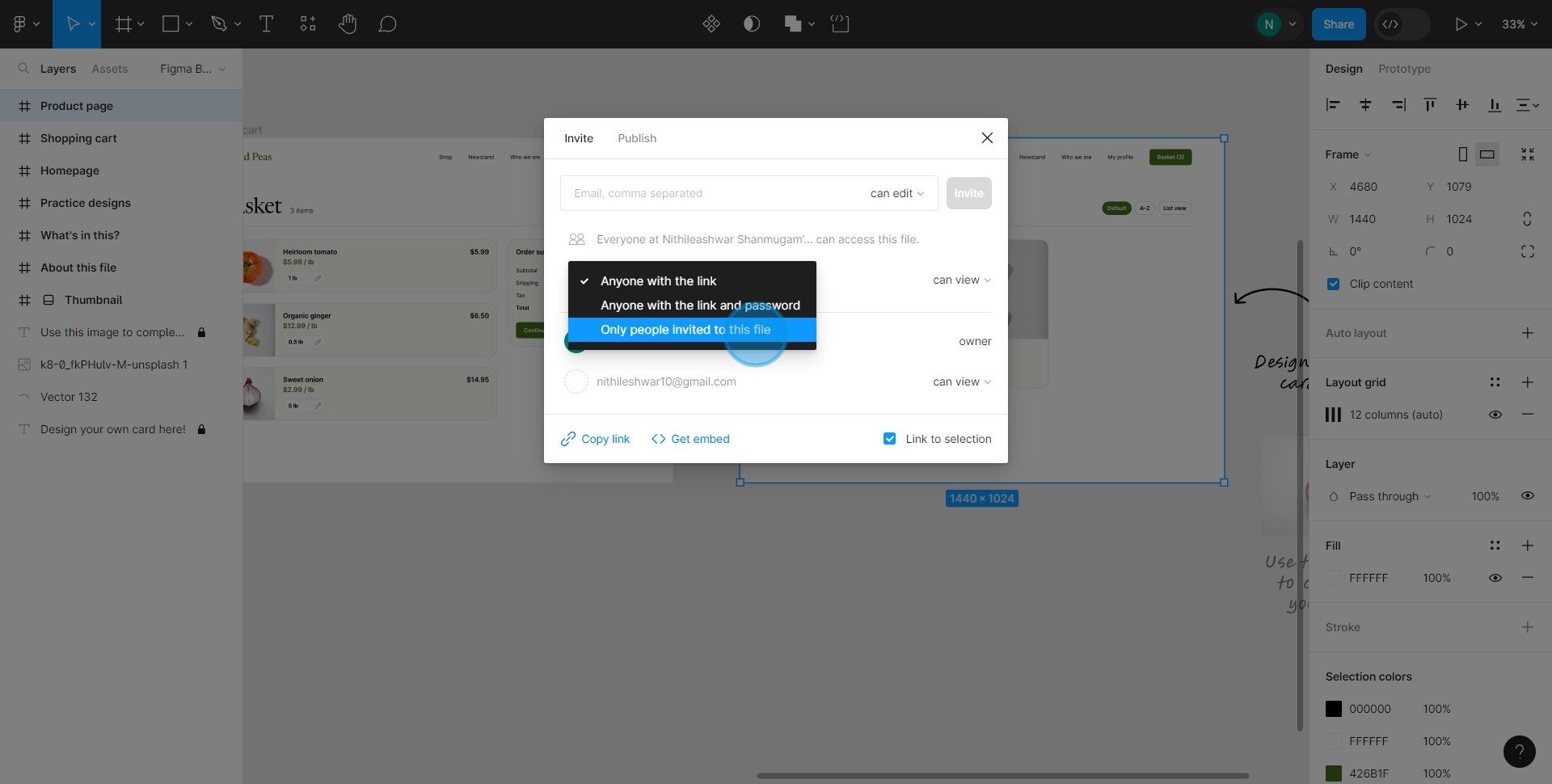
6 Click on "Only people invited to this file"

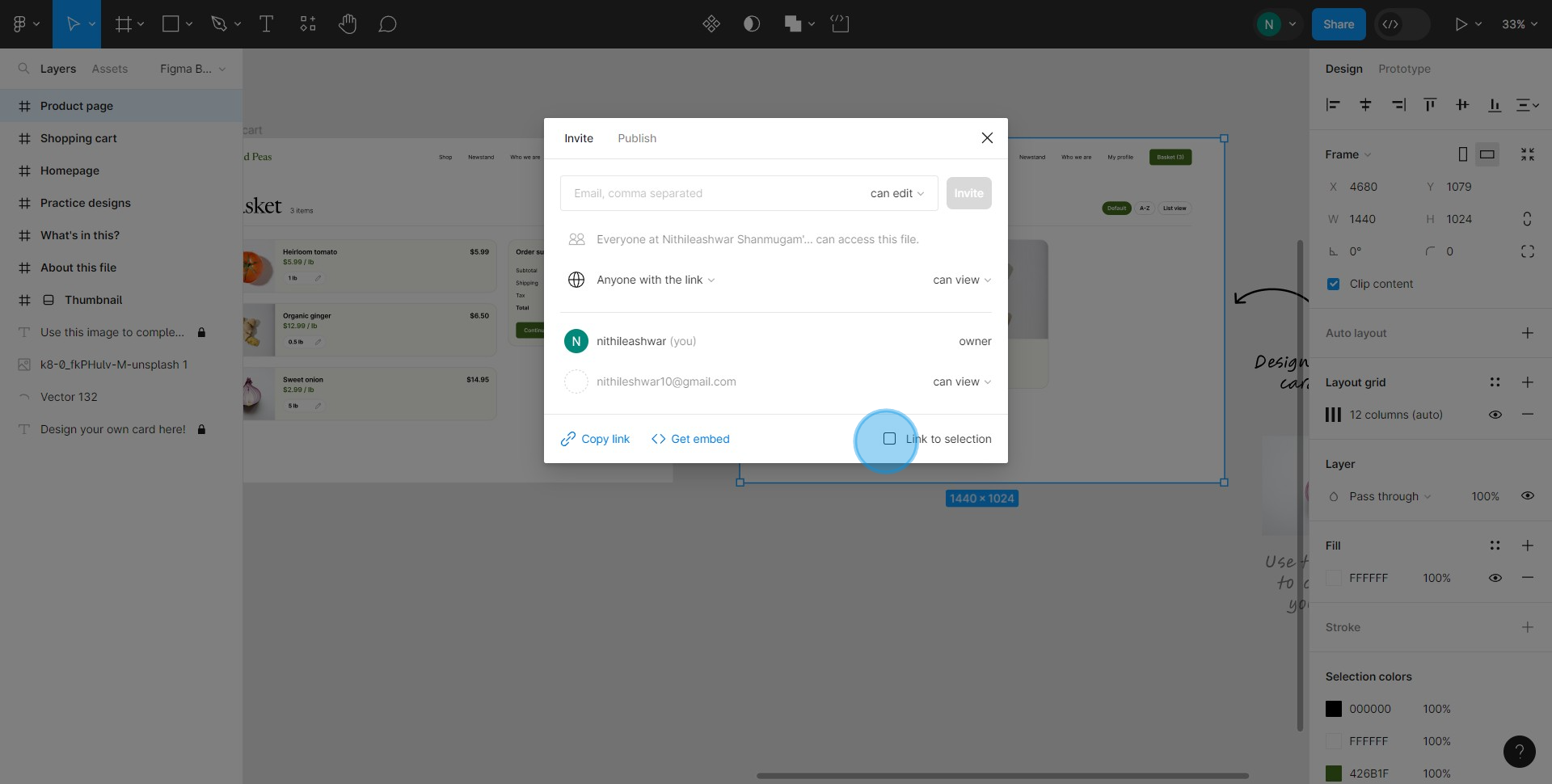
7. Provide an email in the given input field.
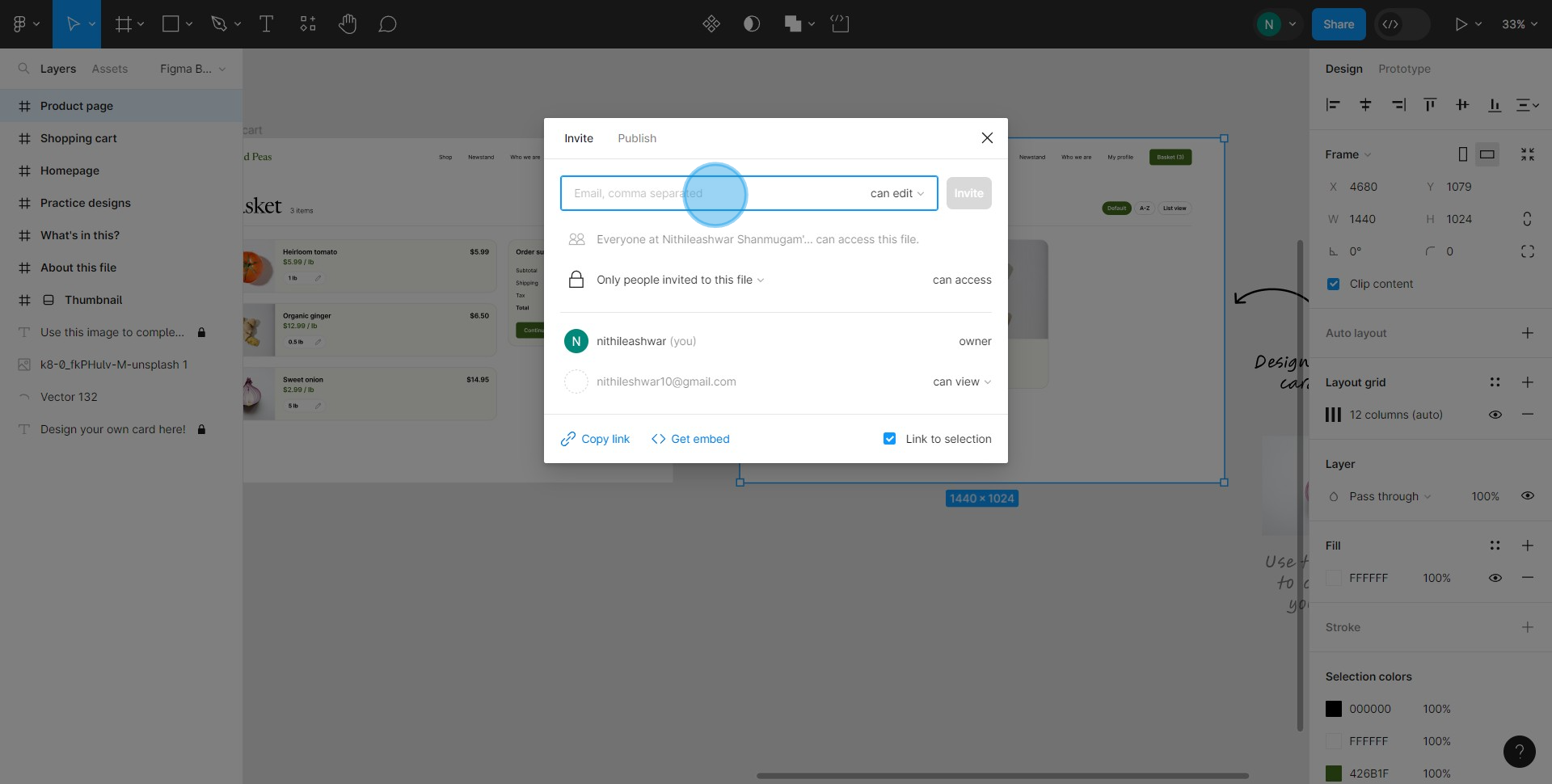
7 Click here

8. Finally, finish by clicking on the 'Invite' button.
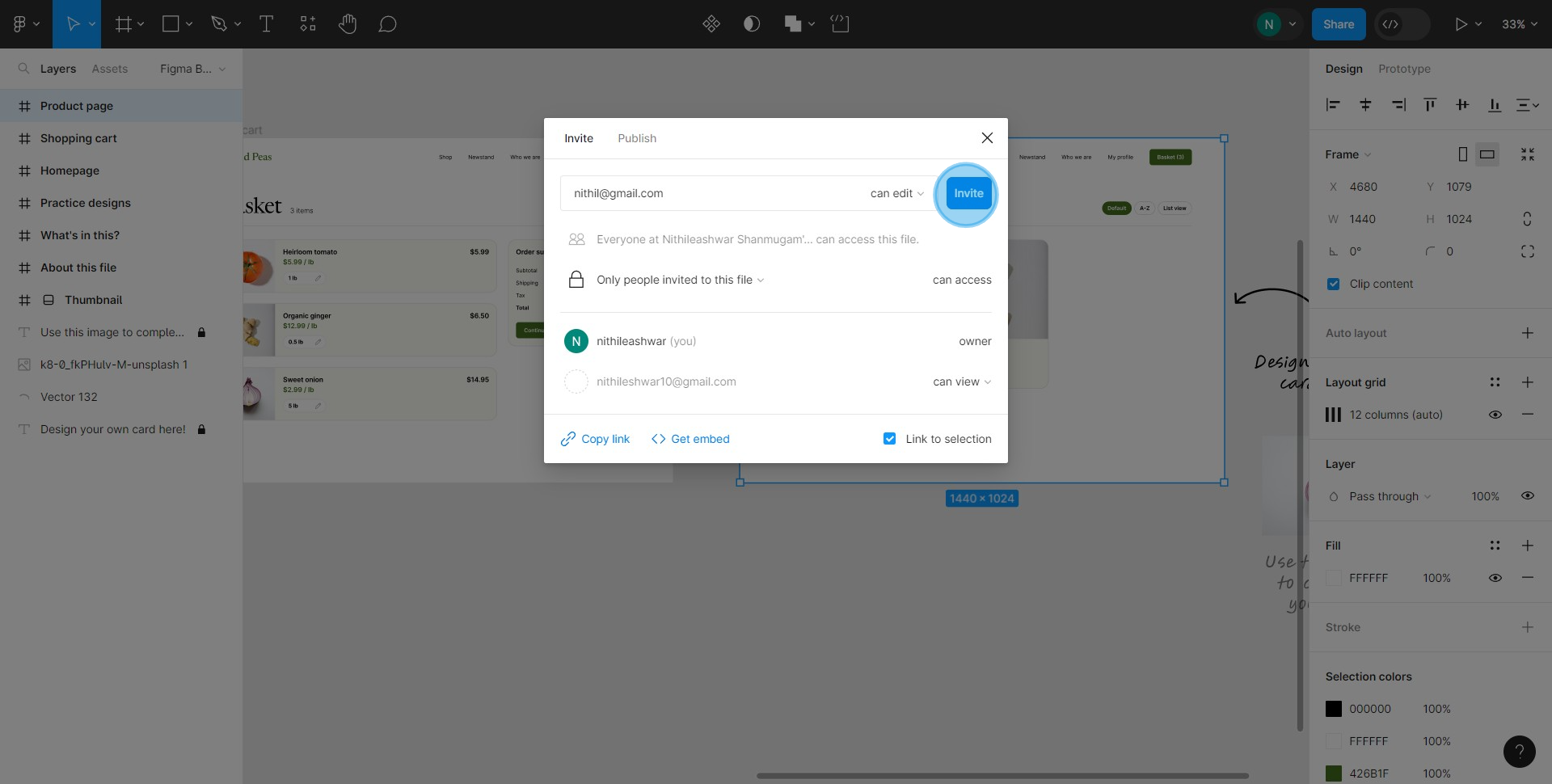
8 Click on "Invite"

Common FAQs on Figma

Commonly asked questions about this topic.

How do I create and organize design projects in Figma?

To create a design project in Figma, log in to your account and click the “+ New File” button on your dashboard. You can start with a blank canvas or choose from various templates available in Figma. Organize your project by creating frames, which function like artboards, to structure your design elements. You can create multiple frames within a file to represent different screens or sections of your design. Use layers to manage and group elements within each frame, and take advantage of Figma’s components feature to create reusable design elements, ensuring consistency across your project.

How can I collaborate with others on a Figma design?

Figma is designed for real-time collaboration, allowing multiple users to work on the same design simultaneously. To invite collaborators, open your Figma file and click the “Share” button in the top-right corner. Enter the email addresses of your collaborators and set their access level (e.g., Viewer, Editor). Once shared, team members can view, comment, or edit the design based on their permissions. You can see other collaborators’ cursors in real-time as they make changes. Use the “Comments” feature to leave feedback, discuss design decisions, and tag team members for specific tasks or revisions.

How do I use Figma’s prototyping features?

Figma’s prototyping tools allow you to create interactive mockups directly within your design file. To start prototyping, switch to the “Prototype” tab in the right-hand panel of your Figma file. Click on a design element, such as a button or link, and drag a connector to the frame you want it to link to. You can set interactions like “On Click,” “Hover,” or “Drag,” and choose animations such as slide transitions, dissolves, or instant changes. Once your prototype is set up, click the “Present” button to view and interact with it as if it were a live website or app. Share the prototype with stakeholders by generating a shareable link, allowing them to test and provide feedback.

Create your own step-by-step demo

Scale up your training and product adoption with beautiful AI-powered interactive demos and guides. Create your first Supademo in seconds for free.

Checkout Supademo Figma Plugin: Create interactive prototypes from frames (beta)

Welcome to the easiest way to create and share interactive prototypes from Figma — for free. With the Supademo Figma Plugin, you can transform your existing Figma frames into elegant, interactive prototypes.

Learn more about the Figma plugin through our feature page.

Here's how it works

Interactive demo powered by Supademo

Frequently Asked Questions about how to share individual frames in figma

Commonly asked questions about this topic.

What are best practices for sharing individual frames effectively?

Start by defining your objectives clearly before configuring anything. Keep the structure simple and focused — avoid overloading with unnecessary fields or detail that nobody references. Review and update regularly with your team to catch stale information early, and assign clear ownership so nothing falls through the cracks. Teams using interactive demos across 3-5 use cases report up to 29% higher impact scores.

Can I export or share my individual frames outside of Figma?

Most platforms support exporting to CSV, PDF, or through API access for custom integrations. When sharing externally, consider whether the recipient needs a live view or a static snapshot — live links require account access while exports may go stale. For recurring reports, set up automated exports or scheduled summaries. Data supports this approach: the State of best Arcade alternativess 2026 report shows 78% of teams now use interactive demos in 2 or more use cases.

What integrations does Figma support for sharing individual frames?

Figma typically integrates with popular tools like Slack, Google Workspace, Microsoft 365, and Zapier for cross-platform automation. These integrations help connect sharing individual frames workflows with your existing tech stack. Check Figma's integration marketplace for specific connectors relevant to your use case. According to Supademo's 2026 report, 78% of teams now use interactive demos across 2+ use cases.

What are the key features of Figma for individual frames?

Figma provides built-in individual frames capabilities including customizable templates, real-time collaboration, and integration with other productivity tools. The exact feature set depends on your plan tier — free plans typically cover basics while paid plans unlock automation, advanced views, and admin controls. Evaluate which features align with your team's actual workflow before committing. Worth noting: Supademo was recognized as the #5 fastest-growing software product on G2 in 2025. DBmaestro achieved 80% faster demo delivery after adopting interactive demos.

Is Figma suitable for enterprise-scale sharing individual frames?

For enterprise teams, evaluate Figma's admin controls, SSO support, permission granularity, and audit logging capabilities. Scalability depends on your specific individual frames complexity — what works for a 10-person team may need structural changes at 500+. Most platforms offer enterprise plans with dedicated support and custom SLAs. RB2B eliminated 60+ hours of sales calls in just 30 days using interactive demos.

How do I organize individual frames in Figma for better collaboration?

Use a consistent layout with clear headings, logical groupings, and visual hierarchy. Keep individual items concise — if a individual frames element needs a paragraph of explanation, it probably should be broken into smaller pieces. Color-coding or tagging by category helps teams scan quickly without reading every detail. Learn more about Supademo's features. VRIFY saved over $100k by switching to interactive demos for enablement. Easy Software closed $100k+ in contracts using interactive demos in their sales process.

What common mistakes should I avoid when sharing individual frames?

The biggest mistake is overcomplicating the setup — adding too many fields, views, or automations before validating the basic workflow. Another common issue is inconsistent naming conventions, which makes searching and filtering unreliable at scale. Finally, skipping regular reviews leads to outdated individual frames data that erodes team trust in the system. The average time from recording to publishing a Supademo is just 3.5 minutes. Processmaker saved hundreds of hours by replacing manual demo processes with interactive walkthroughs.
Nithil Shanmugam

Nithil Shanmugam

Nithil is a startup-obsessed operator focused on growth, sales and marketing. He's passionate about wearing different hats across startups to deliver real value.


More from the blog

How to Remove 'Powered by Shopify'

How to Remove 'Powered by Shopify'

Learn how to easily remove the 'Powered by Shopify' text from your online store with step-by-step instructions and tips to customize your Shopify storefront.

Vimal Kumar
Vimal KumarJan 3, 2026
How to Add Products to Shopify

How to Add Products to Shopify

Learn step-by-step how to add products to your Shopify store effortlessly, including tips on product details, images, pricing, and inventory management to boost your online sales.

Vimal Kumar
Vimal KumarDec 17, 2025
How to Deactivate Your Shopify Store

How to Deactivate Your Shopify Store

Learn step-by-step how to deactivate your Shopify store easily, including important considerations and tips to pause or close your shop without losing data.

Vimal Kumar
Vimal KumarDec 17, 2025
How to Remove 'Powered by Shopify'

How to Remove 'Powered by Shopify'

Learn how to easily remove the 'Powered by Shopify' text from your online store with step-by-step instructions and tips to customize your Shopify storefront.

Vimal Kumar
Vimal KumarDec 17, 2025
How to Create a Shopify Account

How to Create a Shopify Account

Learn step-by-step how to create a Shopify account quickly and easily, set up your online store, and start selling your products in no time.

Vimal Kumar
Vimal KumarDec 17, 2025
How to Create a Stripe Account

How to Create a Stripe Account

Learn how to create a Stripe account quickly and easily with our step-by-step guide, perfect for beginners looking to start accepting online payments.

Vimal Kumar
Vimal KumarDec 17, 2025