Net Promoter Score Calculator
Free Net Promoter Score calculator for B2B SaaS. Enter promoter, passive, and detractor counts to see your NPS and segment percentages instantly. (Looking for the National Pension Scheme? This is a customer-loyalty metric.)
Net Promoter Score
= (Promoters − Detractors) ÷ Total Respondents × 100
% Promoters
60.0%
% Passives
30.0%
% Detractors
10.0%
How interactive demos increase NPS
- 7x conversion rate vs. traditional demo videos
- beehiiv saw 50% of visitors convert after replacing static screenshots with interactive demos
Trusted by 200,000+ top operators and 3,000+ paying organizations


How to calculate Net Promoter Score
1. Enter your respondent counts
Add the number of promoters (9-10), passives (7-8), and detractors (0-6) from your survey results.
2. Read your NPS instantly
The calculator shows your Net Promoter Score on a -100 to 100 scale as soon as you enter the numbers.
3. Review segment percentages
See the percentage breakdown for each group to understand the composition behind your overall score.
Why use our Net Promoter Score calculator
Instant NPS formula
Calculate Net Promoter Score using the standard (Promoters minus Detractors) divided by total respondents formula.
Segment breakdown
See promoter, passive, and detractor percentages side by side to understand what is driving your score.
Loyalty benchmark context
Understand where your score falls relative to common NPS benchmarks for SaaS and B2B products.
Why we built Supademo's NPS calculator

“The 9s and 10s usually point to one specific moment when the product clicked for them. beehiiv's interactive demos convert at 20%, which tells me their viewers are getting that click moment before they ever talk to anyone.”

“In our 2026 demos report, teams using demos across five use cases scored 4.38 out of 5 on impact versus 3.68 for single-use teams. NPS lags that same idea: more product touchpoints, more promoters.”
Who uses Supademo's NPS calculator?
Connect customer satisfaction to deal quality
Use NPS trends to identify which customer segments and deal types produce the most loyal customers, then focus sales effort there.
Explore sales enablement
Turn promoters into a referral channel
Identify your highest NPS segments to build case studies, testimonials, and referral campaigns that attract similar buyers.
Explore product marketing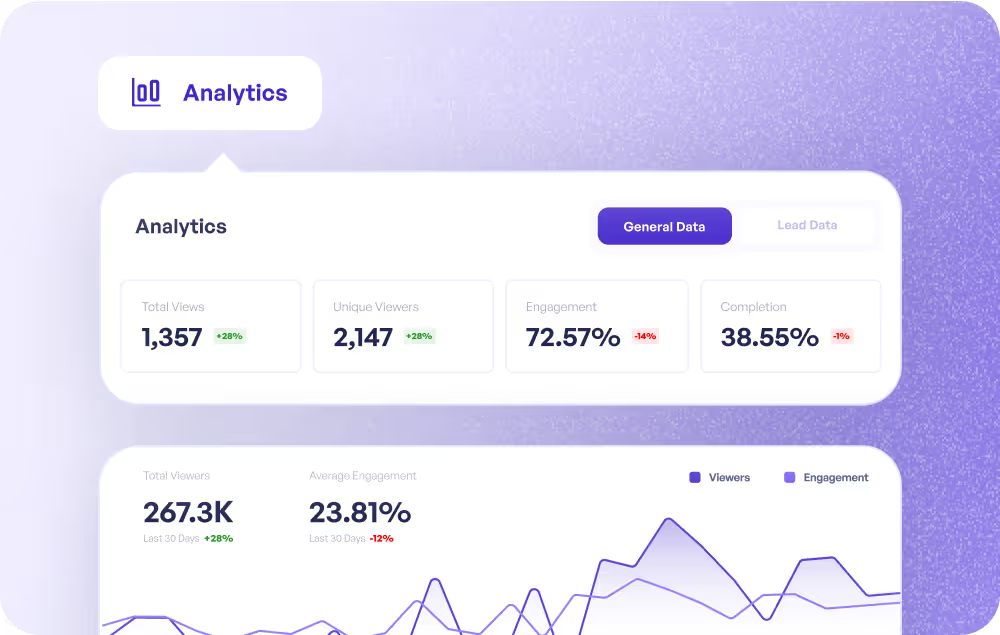
Track loyalty and intervene before churn
Monitor NPS over time to catch drops early and identify which onboarding or support experiences are creating detractors.
Explore customer success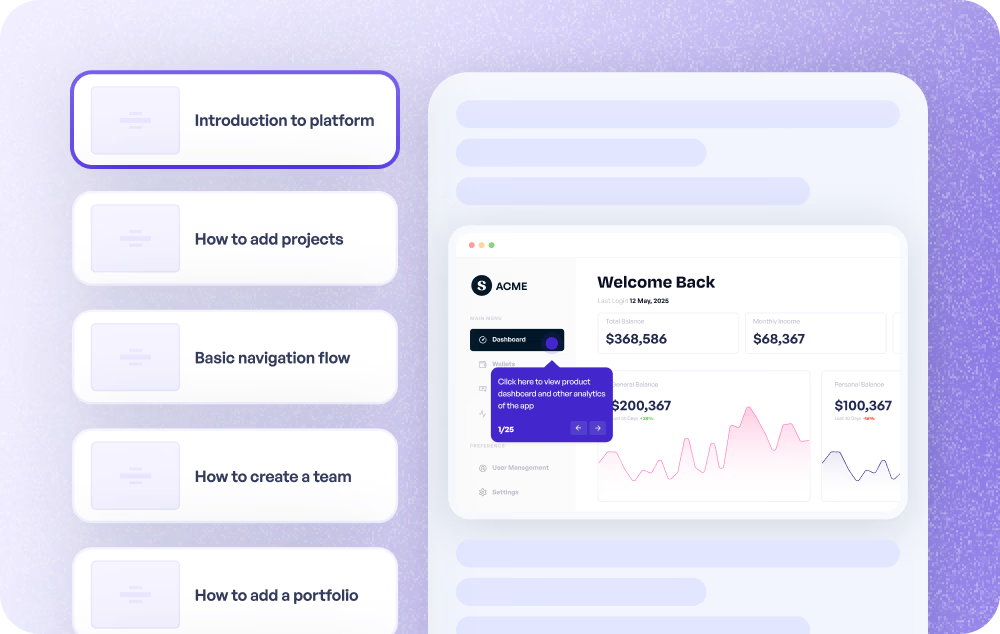
Measure satisfaction after key interactions
Use post-interaction NPS to understand which support experiences create detractors and which create promoters.
Explore customer support
Prioritize features that move promoters
Correlate NPS scores with feature usage to identify which parts of the product create the most loyal customers.
Explore product use cases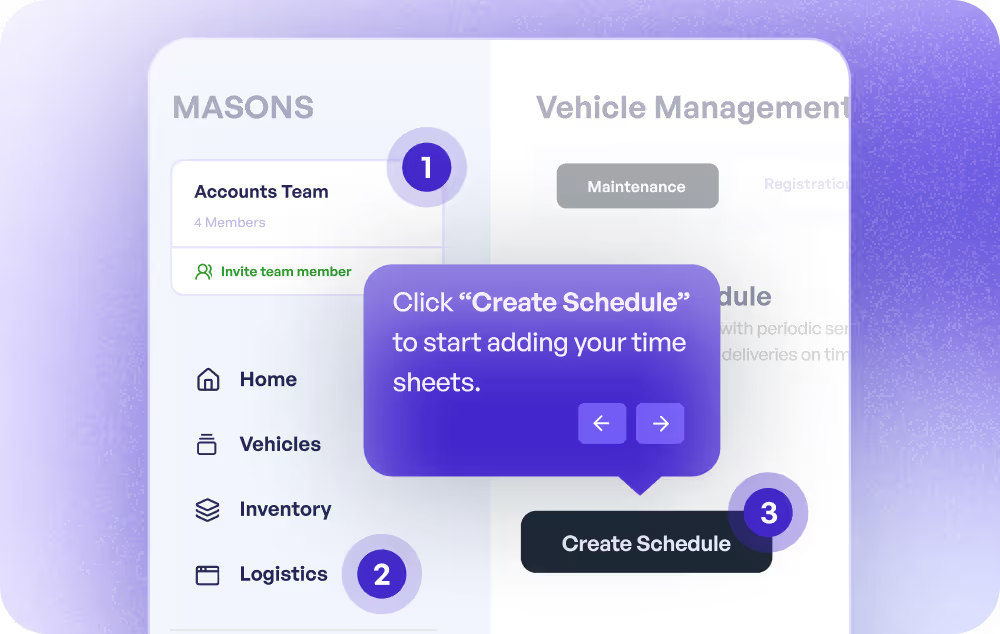
Teach teams to act on NPS data
Help customer-facing teams understand what NPS measures and how to design interactions that increase promoter rates.
Explore training use cases
How do sales teams use NPS?
Sales teams use NPS to understand which customer types become promoters and focus acquisition on those segments.
How do marketing teams use NPS?
Marketing teams use NPS to identify promoters and build referral, testimonial, and case study programs around satisfied customers.
How does customer success use NPS?
Customer success teams use NPS to track loyalty, identify at-risk accounts, and improve onboarding experiences.
How do support teams use NPS?
Support teams use post-interaction NPS to measure satisfaction and identify which types of interactions most affect loyalty.
How do product teams use NPS?
Product teams use NPS data to understand which features and workflows drive promoter behavior and prioritize improvements accordingly.
How do training teams use NPS?
Training teams use NPS to teach customer-facing staff how satisfaction is measured and how to design better customer experiences.
Explore Similar Free Tools
Frequently asked questions
Common questions about Net Promoter Score, NPS benchmarks, and improving customer loyalty.

Net Promoter Score measures customer loyalty by asking a single question: how likely are you to recommend this product, on a scale of 0 to 10. Scores of 9–10 are Promoters, 7–8 are Passives, and 0–6 are Detractors.
NPS is predictive of organic growth and churn risk. High-NPS customers expand, refer new business, and renew at higher rates. It is most useful as a trend metric: whether your score is improving or declining over time matters more than the absolute number.
Subtract the percentage of Detractors from the percentage of Promoters. Passives are excluded from the calculation entirely.
If 50% of respondents are Promoters and 20% are Detractors, your NPS is 30. The score ranges from -100 (all Detractors) to +100 (all Promoters).
This calculator handles that math automatically when you enter the raw response counts from your survey.
Respondents who score 9 or 10 are Promoters. They are likely to recommend the product and contribute to word-of-mouth growth. Scores of 7 or 8 are Passives, satisfied but not enthusiastic enough to actively refer.
Scores of 0 through 6 are Detractors, at risk of churn and capable of generating negative word-of-mouth. The wide Detractor band (seven points versus two for Promoters) reflects the outsized damage unhappy customers can cause through social proof and reviews.
Any positive NPS means you have more Promoters than Detractors. For B2B SaaS, scores above 30 are generally considered strong, above 50 excellent, and above 70 exceptional.
But benchmarks vary widely by industry: enterprise software averages lower than consumer apps because switching costs and stakeholder complexity dampen enthusiasm even among happy customers. Pair NPS with CSAT and retention rate so satisfaction signals reconcile with stickiness. Our guide to customer onboarding metrics covers which leading indicators correlate with high NPS at renewal.
Passives are satisfied but not enthusiastic enough to recommend, which means they contribute neither growth nor advocacy. The NPS formula deliberately excludes them to ensure only strong advocates move the score up.
This makes NPS a stricter measure of loyalty than simple satisfaction. A product can have 70% satisfied customers and still post a mediocre NPS if most of that satisfaction is lukewarm. Passives are worth tracking separately because they are the group most likely to convert to Promoters with the right follow-up and feature exposure.
Most B2B SaaS teams run a relationship NPS survey every 90–180 days to all active customers, and a transactional NPS immediately after key milestones like onboarding completion, renewal, or a major release. Over-surveying leads to fatigue and declining response rates; under-surveying means you miss early signals of churn risk.
The right cadence also depends on your contract length: monthly customers need faster feedback loops than annual enterprise accounts where sentiment can shift quietly for months before renewal.
Interactive demos reduce the "I didn't know it could do that" friction that turns otherwise satisfied customers into Passives. When customers can explore all of a product's capabilities at their own pace and as many times as they need, they get more value, use more features, and develop stronger product affinity. 81% of teams report onboarding demos as their highest-impact use case, and faster comprehension correlates directly with the kinds of activation outcomes that drive Promoter behavior. Explore how Supademo supports customer success teams at customer success use cases.
Yes. Supademo's NPS calculator is completely free to use in your browser with no sign-up required.