Onboarding Snapshot
Activation Event
Publication goes live after clicking Activate
Time-to-Value
Moderate — 15 to 20 steps before activation
Primary Strength
Structured flow with deep ESP integration
Primary Risk
Heavy upfront input before experiencing value
Overview
SparkLoop guides new users through a structured setup flow — connecting an email platform via OAuth, configuring brand identity, and activating a publication. The flow is thorough and well-sequenced, but value is almost entirely back-loaded behind 15-plus steps of input-heavy configuration.
What Should You Steal?
Swipe through actionable takeaways from this onboarding flow.
The integration happens early, not as an afterthought
SparkLoop asks me to connect my email platform within the first few steps.
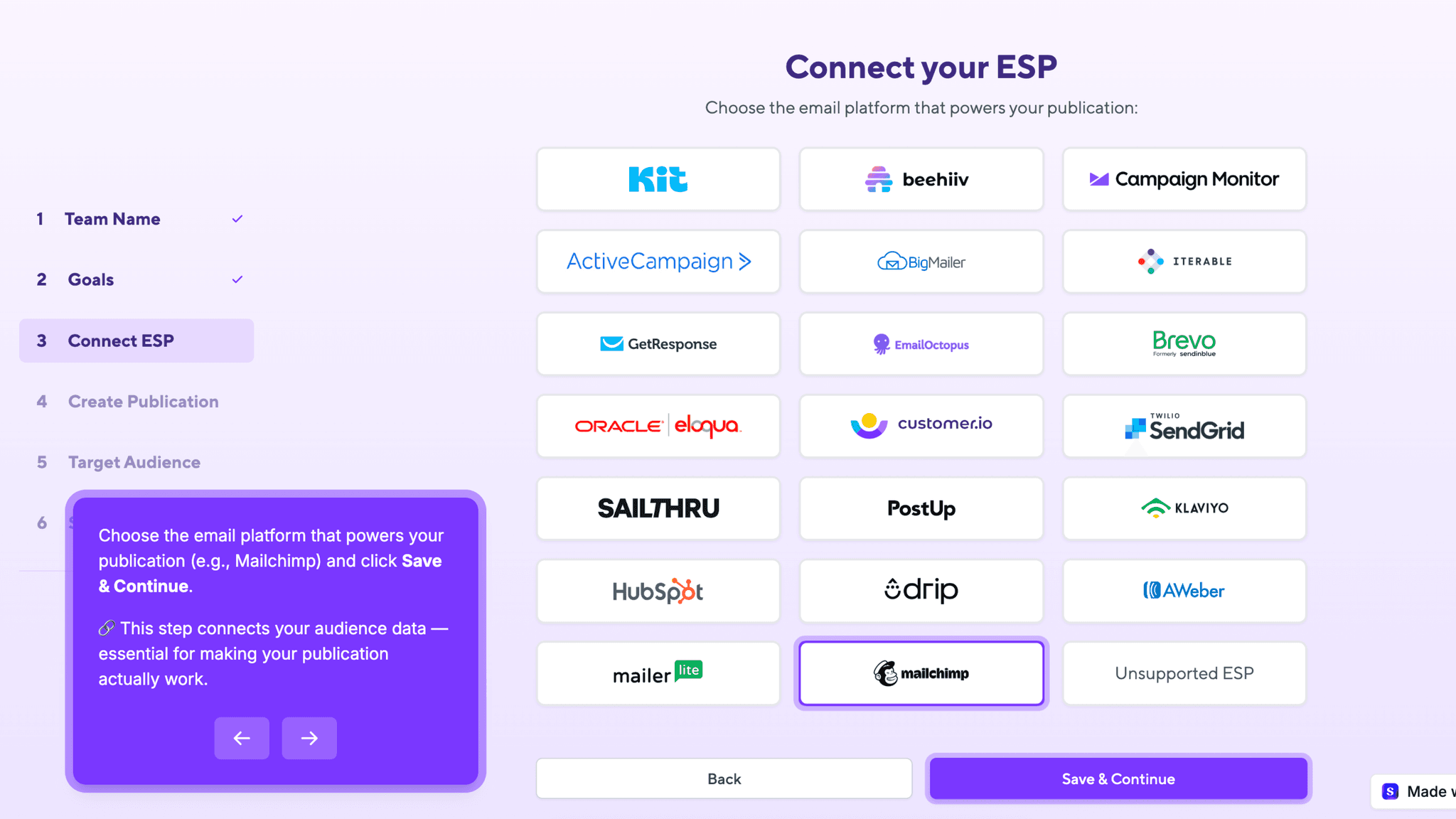
By pulling in list data through OAuth early, everything downstream — audience profiling, list selection — becomes automatic. I didn't have to manually import a CSV or copy-paste subscriber counts. The data was just there. Most tools wait far too long to set up that kind of automatic data handoff. SparkLoop doesn't.
Giving the workspace an identity before anything else
Before SparkLoop shows me any features, it asks for a brand or team name.
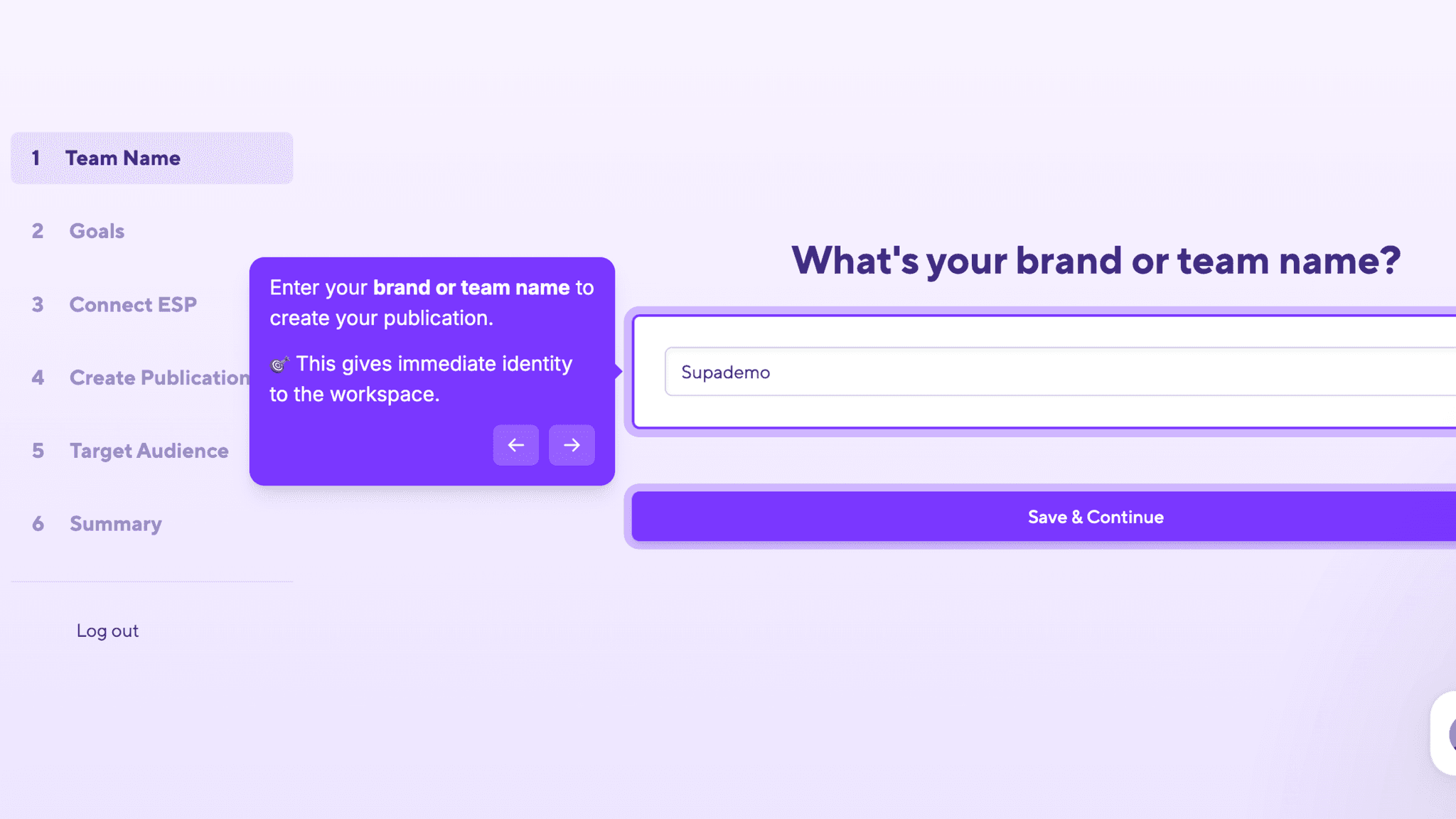
That single field does a lot of work. It transforms an anonymous account into something that feels owned, and by the time I was adding a logo and writing a publication description a few steps later, the setup felt like building something real rather than filling out a form. That psychological shift matters more than it looks like it should.
The personalization questions that actually feel like configuration
Most onboarding surveys feel like theater.
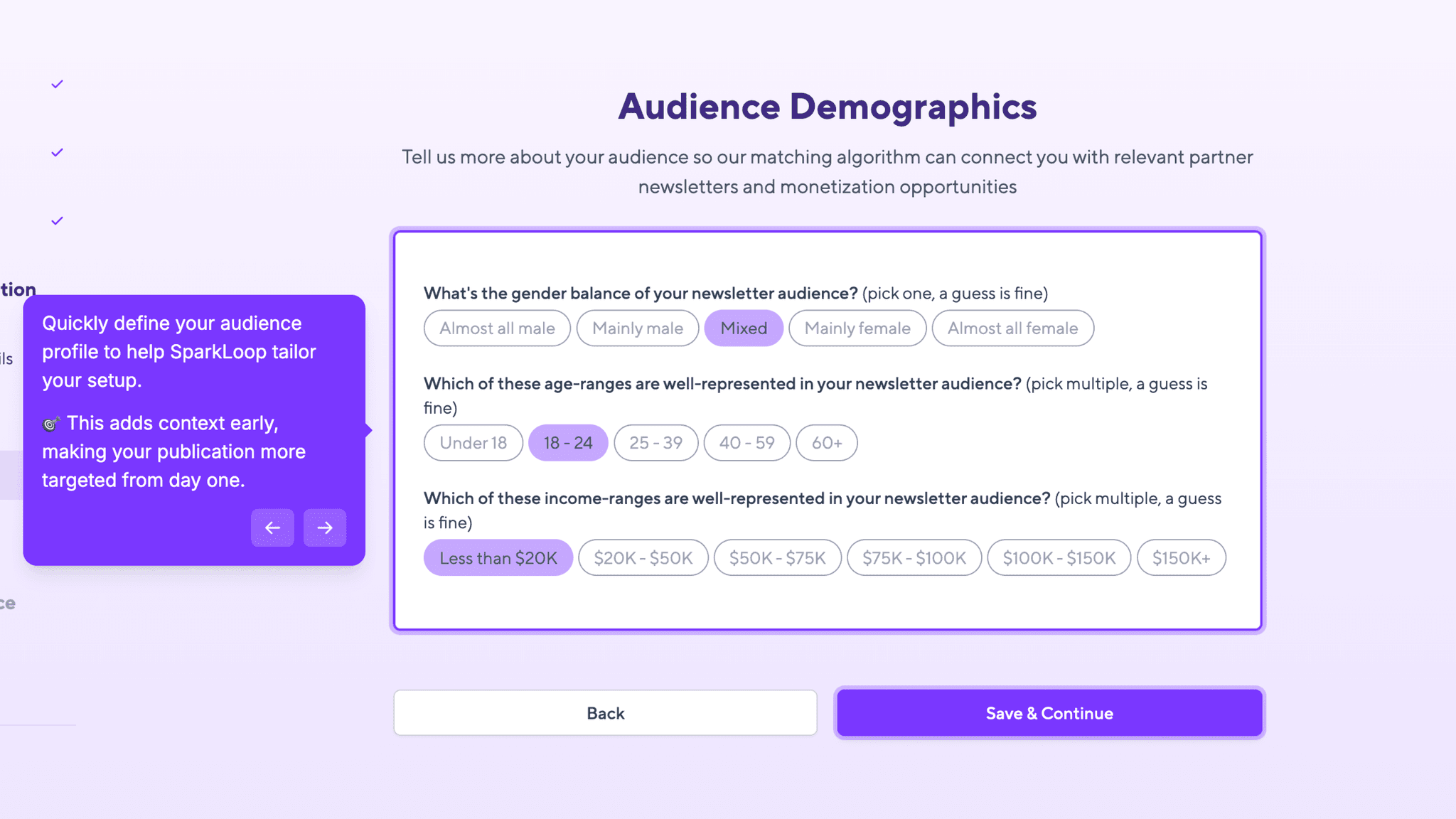
SparkLoop's questions about audience demographics, content topics, and connected platforms are different in tone — they read like genuine configuration. Whether those answers directly shape the recommendations or not is secondary; what matters is that answering them made me feel like the product was being tuned to my specific situation. That perception alone builds trust during setup.
Onboarding Tactics That Work
OAuth-based ESP integration auto-fetches list data, no manual import needed
Early brand naming gives the workspace immediate identity and ownership
Structured audience profiling questions feel like product configuration, not busywork
Where There's Friction
Repeated 'Save & Continue' steps create a sense of never-ending setup
Value realization is delayed until the very end of a long flow
Multiple input-heavy screens appear before I see any product capability
When Is the In-App Activation Moment?
Clicking 'Activate your publication' and watching it go live is the moment the entire flow has been building toward. By the time I reached that screen, I'd connected an email platform, confirmed branding, selected a subscriber list, answered demographic questions, and linked external channels. The activation button didn't feel like a button. It felt like a conclusion.
What's notable is how deliberately SparkLoop frames that beat. There's a review screen before activation that acts as a final checkpoint, showing everything I'd configured. The Activate button comes after that. It's a two-step signal that this is the transition from setup to live product, not just another form submission. That emotional payoff is real. The distance between step one and that moment is long enough that some people won't make it, and the flow does nothing to shorten it once it's started.
The Bottom Line on SparkLoop's Onboarding
SparkLoop's onboarding is structured in a way that clearly works for the product it's building. A newsletter growth platform needs real data to be useful, and the OAuth integration early in the flow is a smart decision that removes a genuine source of friction later on.
The pacing is the one thing I'd push back on. The flow is long, and the value is almost entirely back-loaded. By the time I hit Activate, I'd made it through 15-plus steps without seeing SparkLoop do much for me yet. Some of that setup is genuinely necessary. But several of the personalization screens, particularly the demographic preferences, could be deferred to after activation without breaking the experience. Keeping them where they are is a choice that costs drop-off. If your product requires meaningful setup before it can show value, look for every place where inputs can be pulled automatically or deferred until the user is already engaged. SparkLoop does the first part well. It hasn't done the second part yet.
If your product requires meaningful setup before it can show value, look for every place where inputs can be pulled automatically or deferred until the user is already engaged.
FAQs
Common questions about SparkLoop's onboarding flow and what makes it effective.
How does SparkLoop onboard new users?
SparkLoop walks new users through a step-by-step setup flow that starts with creating a publication, connecting an email platform via OAuth, and configuring audience details. The flow ends with a final review screen and an explicit activation step that brings the publication live. It's a guided process with no skippable steps.
What makes SparkLoop's onboarding stand out?
The OAuth integration with email platforms like Mailchimp is the most distinctive part of the flow. Rather than asking users to manually input subscriber data, SparkLoop pulls it automatically once the connection is authorized. The early emphasis on brand identity, naming the workspace before anything else, also helps the setup feel meaningful from the start.
How long does it take to reach value in SparkLoop?
The activation moment comes after roughly 15 to 20 steps, which puts it on the longer end for SaaS onboarding. Most of that time is spent on setup and configuration rather than exploring the product. Users who complete the full flow reach a clear activation point, but the path there requires sustained commitment.
How does SparkLoop compare to other SaaS tools?
Compared to tools that try to get users to a value moment within the first two or three screens, SparkLoop is more front-loaded. The depth of setup it requires reflects the nature of the product. Newsletter growth platforms need real data and real branding to function, so the longer flow is partly justified.