Onboarding Snapshot
Activation Event
First form published and live for responses
Time-to-Value
~2–5 minutes, no account required
Primary Strength
Editor-first flow lets users build before being asked to sign up
Primary Risk
No explicit activation guidance may create hesitation for less confident users
Overview
Tally's onboarding is built around one insight: users convert better when they have something to protect. By letting me build a real form before asking for authentication, Tally ensures signup happens after investment, not before it. That sequencing is the sharpest activation decision in the flow, and most form tools don't make it.
What Should You Steal?
Swipe through actionable takeaways from this onboarding flow.
How Tally Reduces Decisions Early
"No sign up required" is structural onboarding design, not just marketing copy.
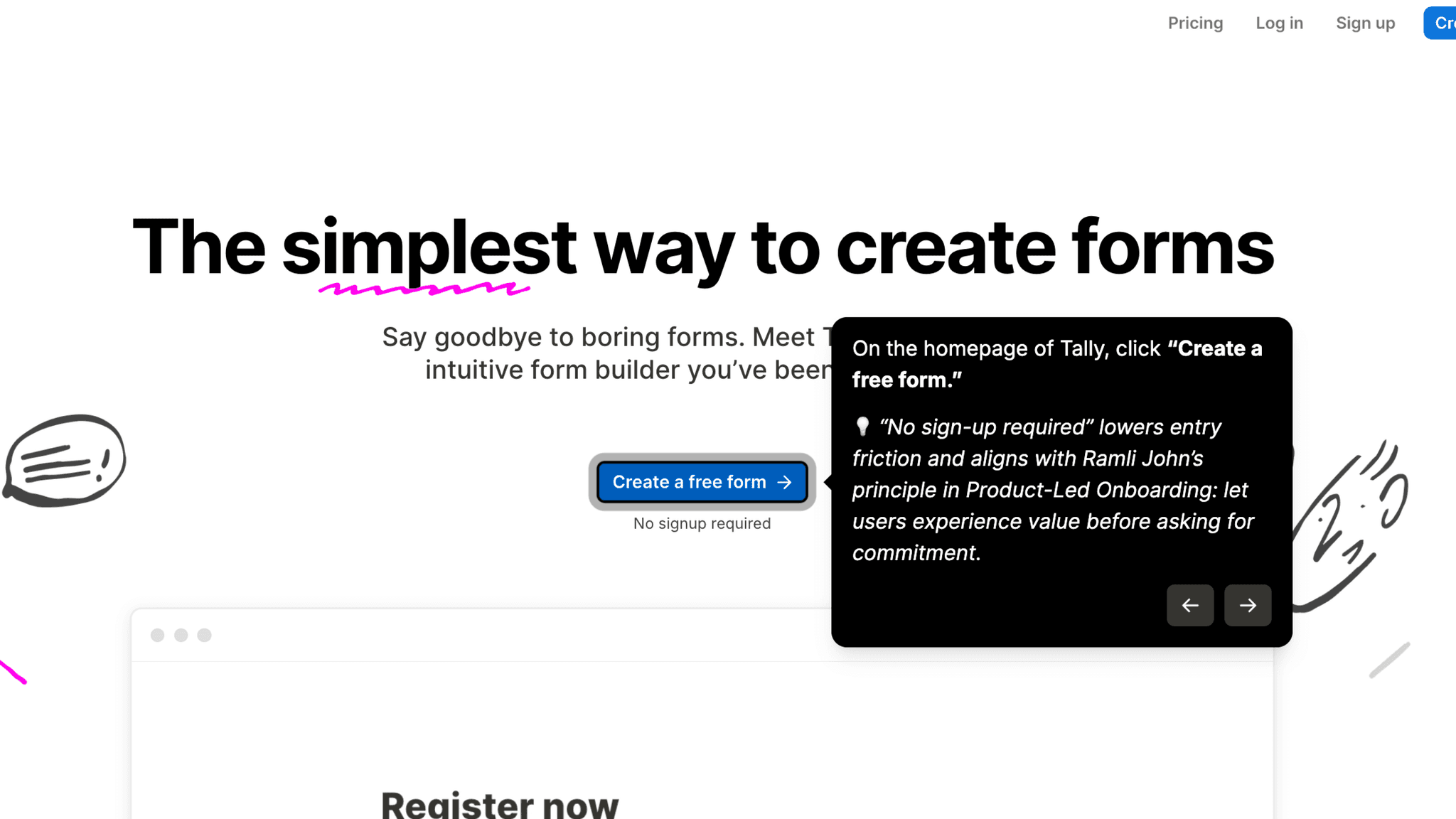
Tally's homepage CTA puts users directly into the editor before authentication enters the picture. No email wall, no gated preview, no forced tour. The most common early-stage friction in PLG — commitment before proof — is gone. I'm building a real form within seconds of landing on the page.
How Tally Reduces Decisions Early
The editor teaches through use, not explanation.
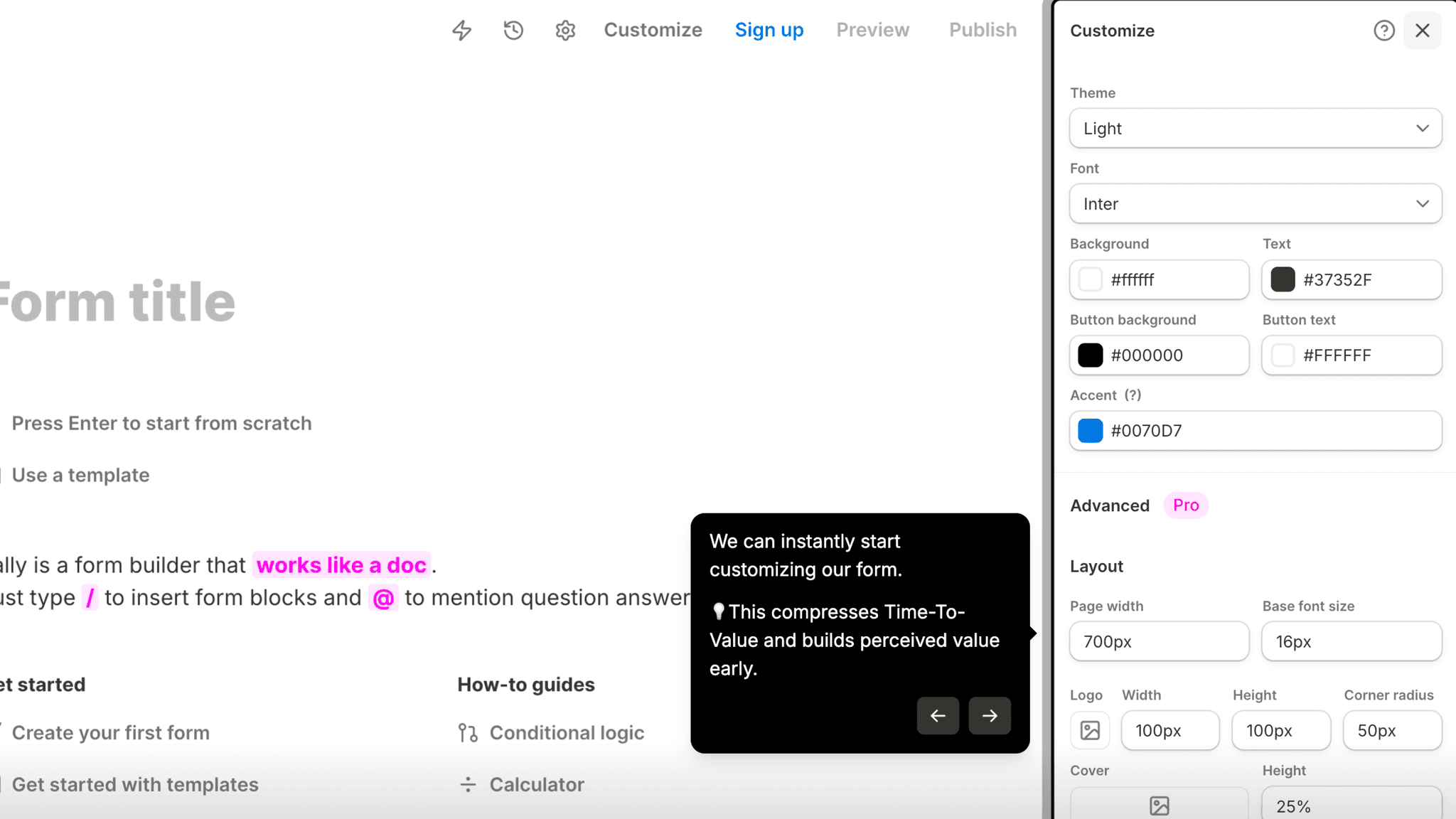
Pressing Enter starts form creation immediately. The interface is minimal enough that exploration comes naturally, and meaningful interaction with the product happens before any guidance is offered. There's nothing to dismiss, nothing to click through. For motivated builders, that's the right call.
How Tally Reduces Decisions Early
Authentication appears at the highest-intent moment:
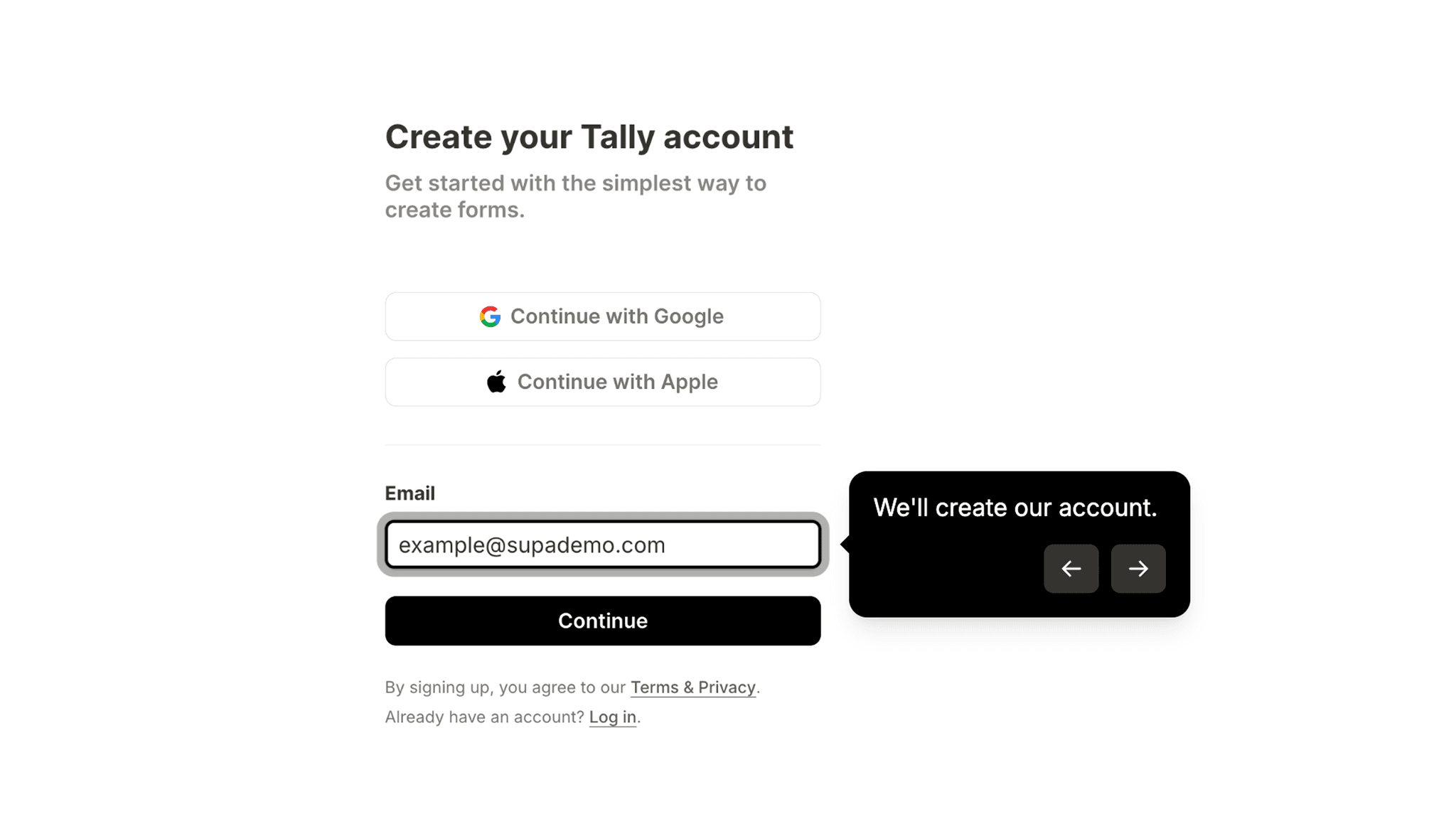
publishing. Tally doesn't gate at creation, it gates at distribution. Creation is exploration; publishing is commitment. By the time I hit the auth wall, I've written questions, structured a form, and invested real effort. Signup protects something I've already built rather than asking for commitment before I've seen anything.
How Tally Handles Empty States
The blank editor is low-stakes because the path forward is immediately obvious.
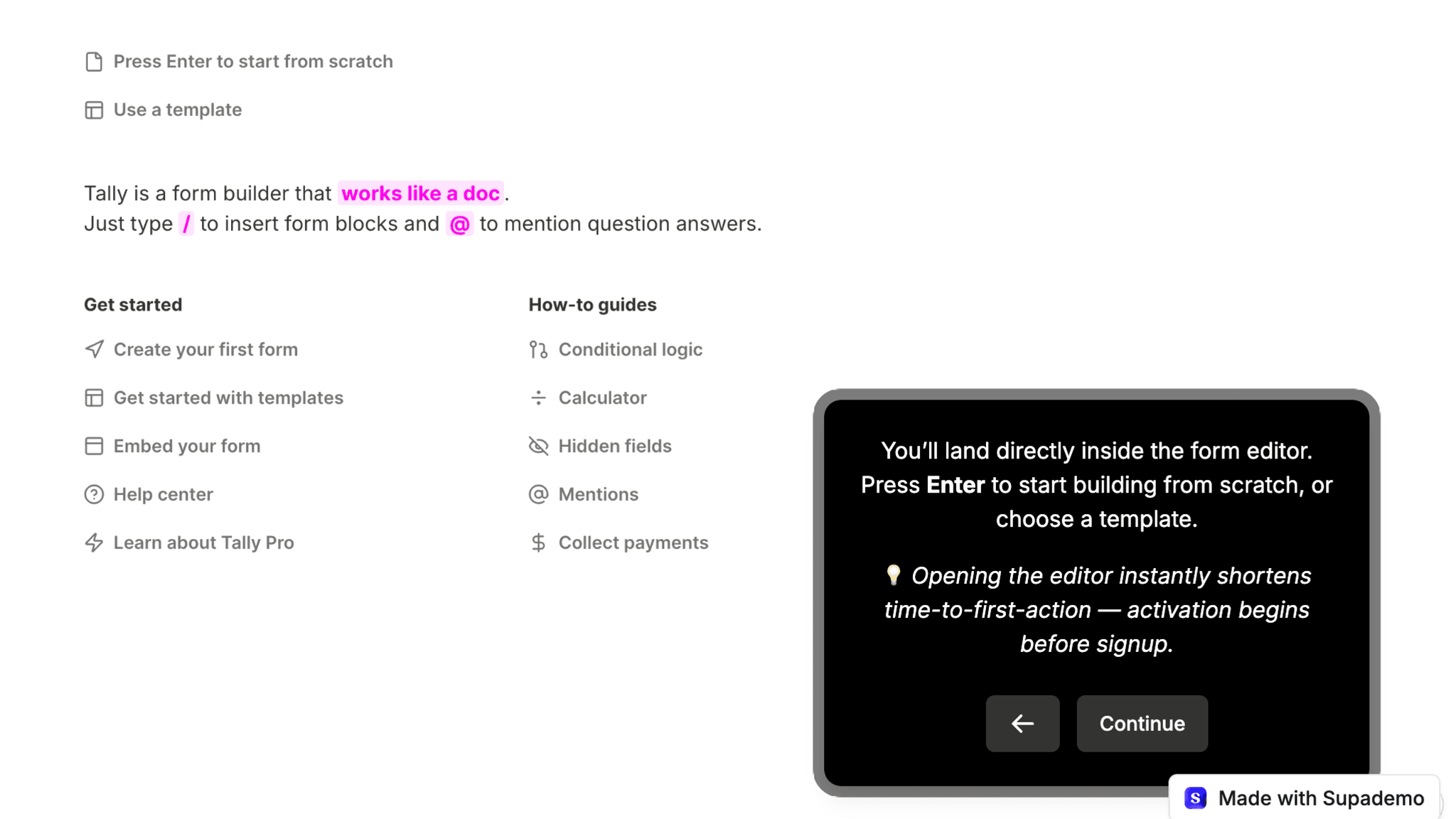
A single prompt — press Enter to begin — removes decision paralysis at first contact. No format selector, no welcome modal, no choice between starting from scratch or picking a template. The product assumes I'm here to build something and gets out of the way.
How Tally Handles Empty States
Templates are organized by use case (Marketing, Product, HR, Creator, Personal, Office) and can be previewed, selected, and modified immediately.
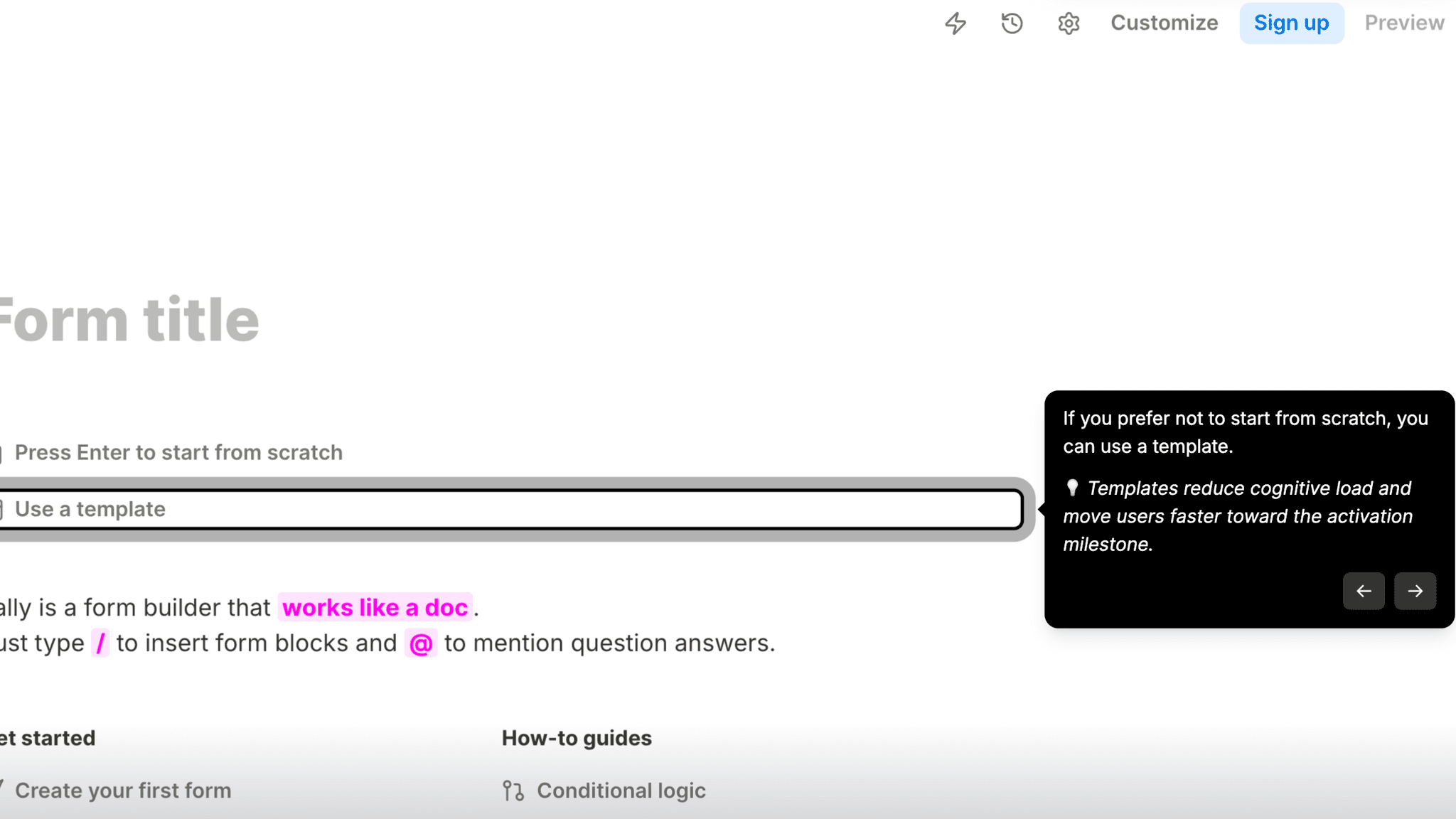
They reduce blank-page friction for users who aren't sure what to build first, without forcing a rigid flow on users who already know what they want. The two paths coexist without friction.
Onboarding Tactics That Work
Full editor access before signup removes commitment-before-proof friction
Auth wall appears at publish — a high-intent moment tied to real distribution
Progress preserved after login — no reset, no lost work
Templates reduce blank-page friction without imposing structure
Where There's Friction
No explicit activation nudge toward publishing a first form
Less confident users may hesitate without guidance on what to build
Collaboration signals (Add Members) are subtle; expansion path not prominently shown
No post-publish celebration or next-step prompt after first form goes live
When Is the In-App Activation Moment?
The Activation Event in Tally is publishing a form and making it live. A link someone can open, fill out, and submit.
Getting there takes 2–5 minutes, most of it spent actually building the form. The path is short: land on the homepage, click the CTA, write questions in the editor, hit publish, authenticate. The auth step interrupts the flow, but Tally handles it cleanly. After login, I'm returned directly to my form with no reset and no confusion. The interruption costs a moment; it doesn't cost the session.
There's no progress indicator, no checklist, no explicit prompt toward publishing. The product trusts that users who've built a form will find the publish button on their own. For confident builders, that assumption holds. For users who aren't sure whether what they've built is ready, or what "ready" even looks like for a form, the silence at this step means some forms stay as drafts when they could have gone live.
After publishing, nothing happens. No celebration, no prompt to share the link, no nudge to submit a test response. For a tool where the Activation Event depends on someone else — the form only works when another person fills it out — the absence of a post-publish prompt to actually send the link is the clearest gap in an otherwise fast flow.
The Bottom Line on Tally's Onboarding
Tally's onboarding is built around one insight: users convert better when they have something to protect. By letting me build a real form before asking for authentication, Tally ensures signup happens after investment, not before it. That sequencing is the sharpest activation decision in the flow, and most form tools don't make it.
The gap is what comes after. The path to first form is fast and well-designed, but the product goes quiet at both moments that matter — publishing, and first submission. A post-publish prompt to send the link, or a nudge to collect a test response, would turn the activation moment into something that lands rather than something that just completes.
Steal the pre-auth editor. If your product lets users create anything, consider whether authentication needs to happen before they've built something worth saving. In most cases, it doesn't.
FAQs
Common questions about Tally's onboarding flow and what makes it effective.
How does Tally onboard new users?
Tally drops users directly into the form editor without requiring an account. Pressing Enter starts form creation immediately. Authentication appears only when users attempt to preview or publish, a high-intent moment tied to distribution. The Activation Event, publishing a live form, typically takes 2–5 minutes from the homepage.
What makes Tally's onboarding experience stand out?
The pre-auth editor is the defining pattern. Rather than gating access behind a signup flow, Tally lets users build a real form before authentication enters the picture. By the time users hit the auth wall, they've already invested effort, so signup protects something they've built rather than asking for commitment upfront. Progress is preserved after login, so authentication doesn't reset the session.
How long does it take to reach value in Tally?
From the homepage to a published, live form takes approximately 2–5 minutes. That's among the fastest activation paths in this gallery. The editor requires no setup, no onboarding steps, and no account — users are building immediately after clicking the CTA.
How does Tally's onboarding compare to other SaaS tools?
Tally's pre-auth editor is the clearest example of value-before-commitment in this gallery. Canva's onboarding is the closest structural parallel — both get users into creation immediately — but Canva still requires authentication before the editor opens. Tally removes that step entirely. The post-activation silence is a pattern shared with Figma, which also doesn't mark the first activation moment after users reach it.