Onboarding Snapshot
Activation Event
First question asked and answer received — no account required
Time-to-Value
Near-instant — product interaction precedes signup entirely
Primary Strength
Pre-auth product experience means users see value before committing to anything
Primary Risk
Rapid monetization sequence after signup creates friction before deeper engagement
Overview
Perplexity represents the leading edge of PLG onboarding design. The product lives on the homepage, accessible before login, which means the Aha Moment arrives before any commitment is required. You don't build a new search habit by describing a product. You build it by letting people use it first.
What Should You Steal?
Swipe through actionable takeaways from this onboarding flow.
How Perplexity Reduces Decisions Early
The product is the homepage.
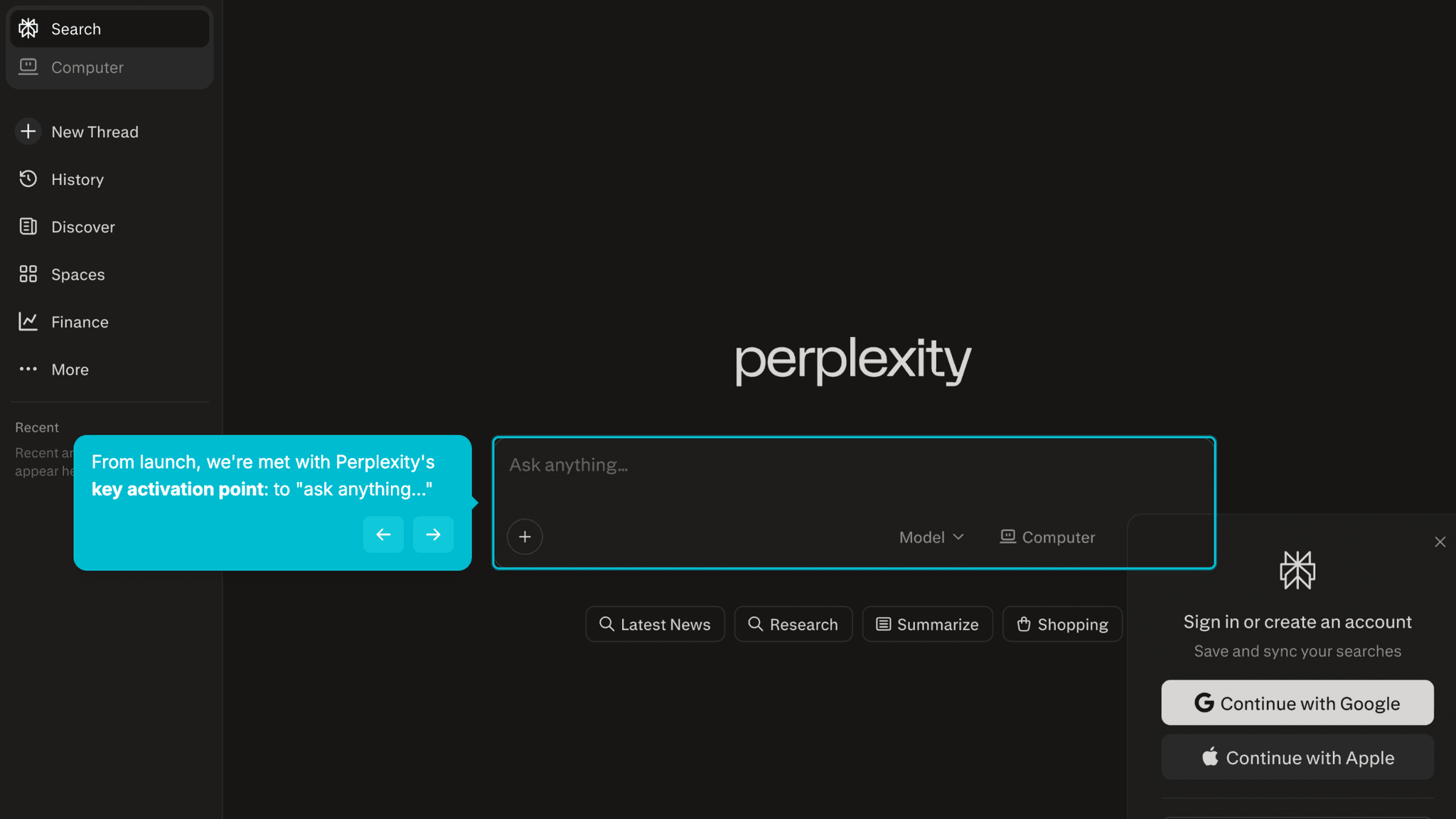
Perplexity doesn't describe what it does. It puts the search interface front and center and invites me to ask anything. I type a question, I get an answer with cited sources, and the product has demonstrated its value before I've entered an email address. The Activation Event happens before authentication, not after.
How Perplexity Reduces Decisions Early
The mid-session pop-up is well-timed segmentation.
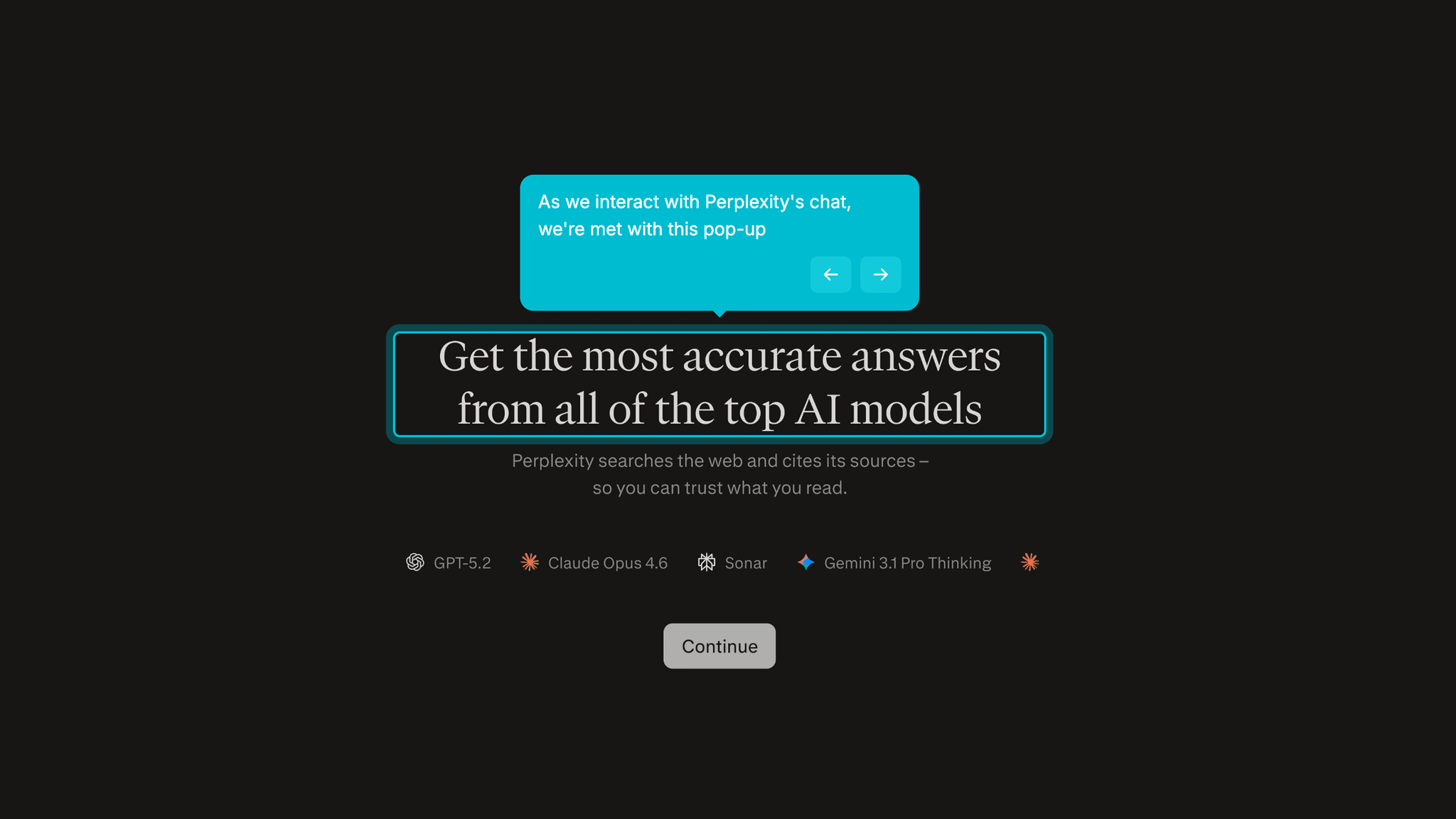
After I've interacted with the product and seen real results, Perplexity surfaces a modal explaining that it searches the web and cites its sources — then asks how I want to use it: Personal, School, or Team. I've already seen the product work, so the segmentation question feels relevant rather than gatekeeping.
How Perplexity Handles Empty States
There is no empty state.
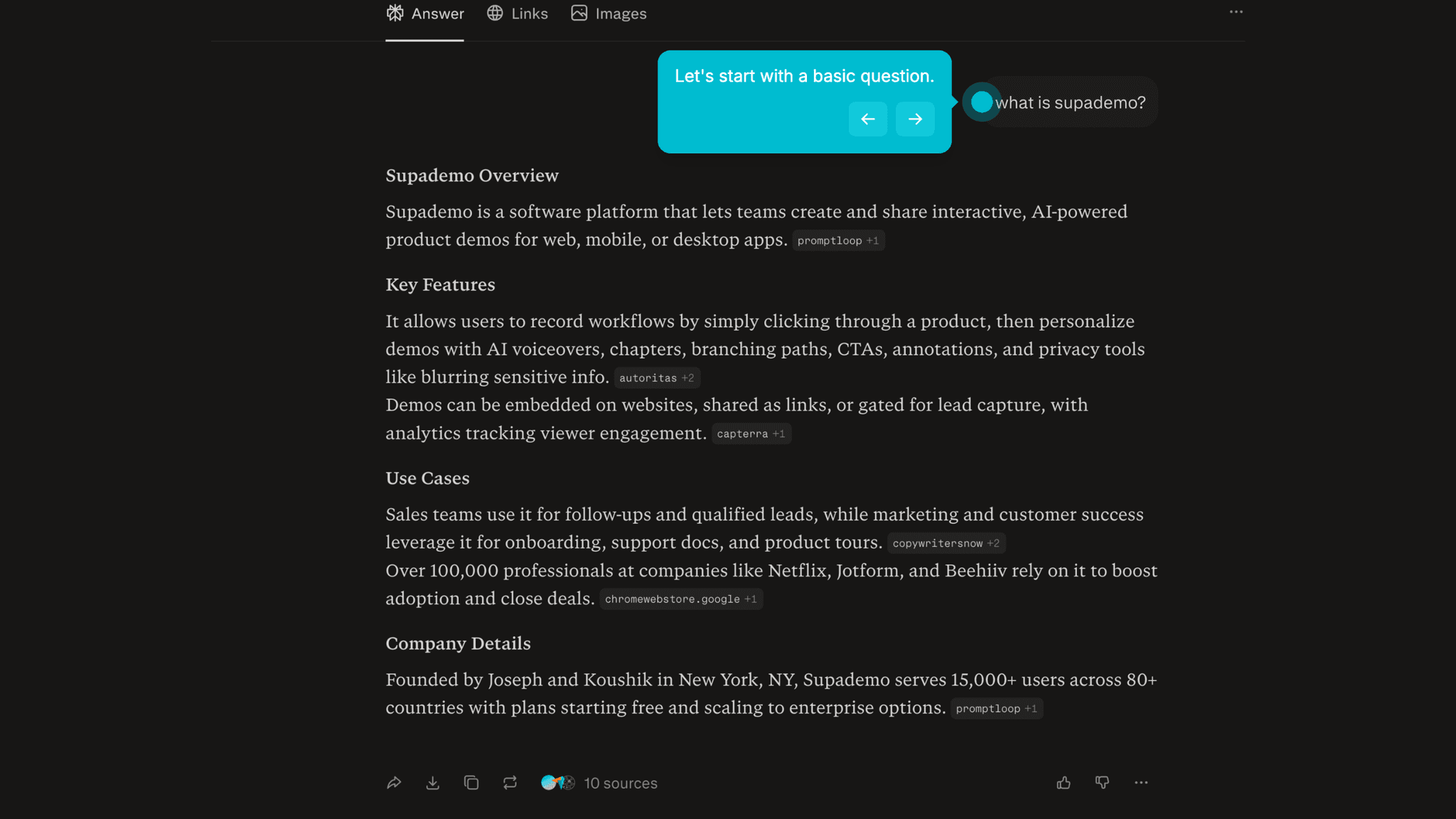
The search bar is the entire interface on first load. No dashboard, no template, no setup step before I can interact. The product begins the moment I land on the page.
How Perplexity Handles Empty States
Cited sources in every answer do meaningful trust work.
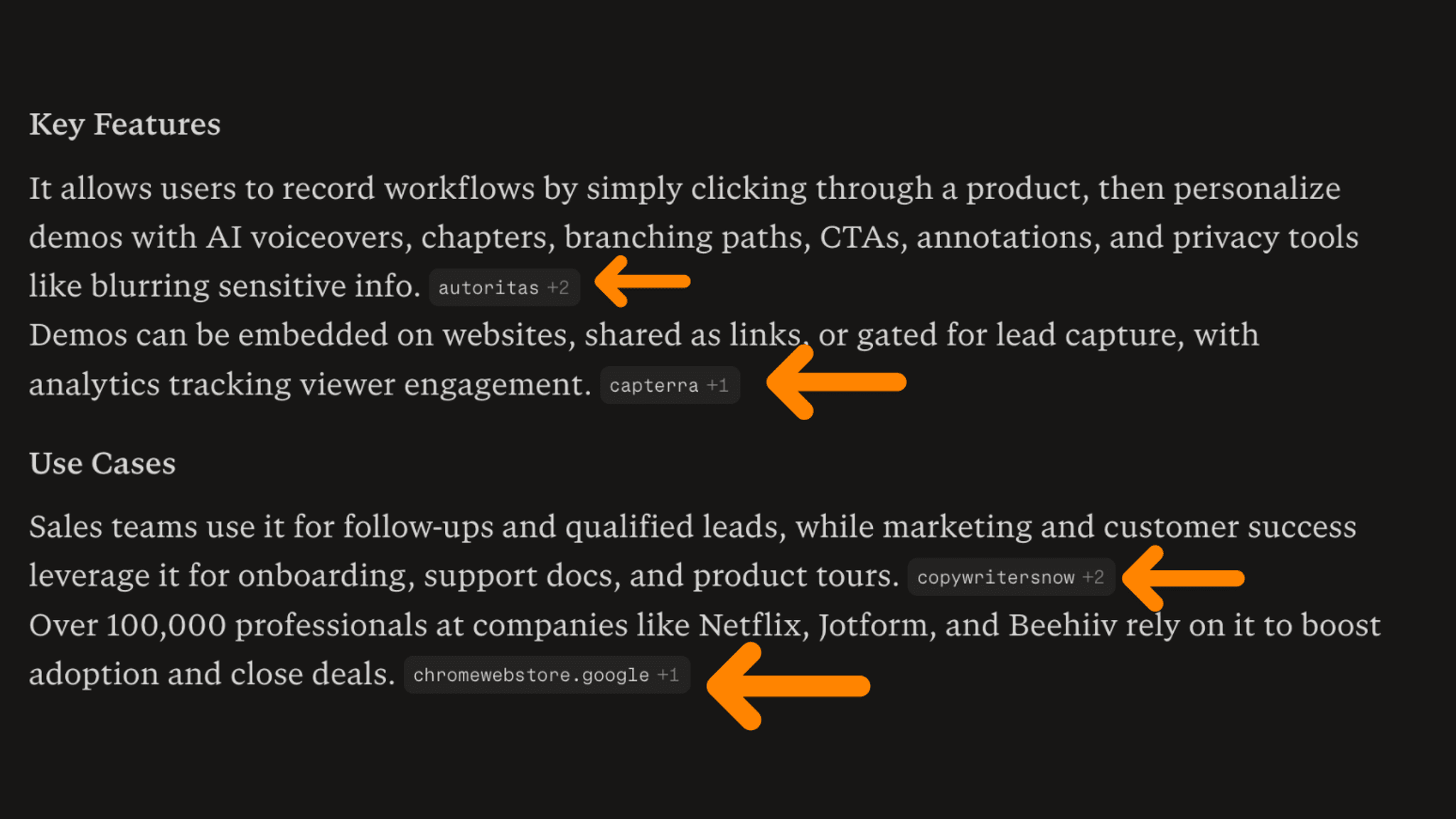
Seeing web sources listed next to the response differentiates Perplexity from AI tools that produce confident-sounding but uncited output. For a new user deciding whether to rely on the product, that sourcing is part of what makes the first answer feel credible — not just fast.
Onboarding Tactics That Work
Product interaction before signup — Activation Event precedes account creation
Near-instant Time-to-Value — ask a question, get a cited answer immediately
Mid-session segmentation pop-up arrives after value is demonstrated, not before
Segmentation question (Personal, School, Team) is fast and contextually relevant
Where There's Friction
Pricing page appears before account is fully established
Pro upsell with 7-day trial appears immediately after plan selection
Payment page before deeper product engagement may feel premature to some users
Multiple monetization steps in quick succession compress the engagement window
When Is the In-App Activation Moment?
The Activation Event in Perplexity happens before signup. I ask a question, I get a sourced answer, and the product has already done what it promised.
That's the defining feature of the model: activation precedes authentication. Most PLG products work in the opposite direction — sign up, set up, then maybe see value. Perplexity inverts that entirely. The habit it wants to build, coming here instead of Google, is already forming before I've created an account.
The sign-in sequence that follows is short. The segmentation question collects useful data without slowing the flow. But then the monetization sequence arrives:
Three steps. In quick succession. Before the user has explored the product at any depth.
Perplexity has already demonstrated value, so asking users to consider upgrading isn't unreasonable timing. The issue is velocity. Some users will convert. Others will feel the product is moving toward payment before they fully understand what Pro includes, or whether they need it.
The Bottom Line on Perplexity's Onboarding
Perplexity represents the leading edge of PLG onboarding design. The product lives on the homepage, accessible before login, which means the Aha Moment arrives before any commitment is required. You don't build a new search habit by describing a product. You build it by letting people use it first.
Where it gets aggressive:
The pre-auth activation is worth stealing unconditionally. The post-signup monetization pacing is a judgment call — it works for users who are already convinced, and it moves too fast for users who aren't.
Steal the homepage product experience. If your product can be experienced before signup, that's where the Activation Event should live. Not behind an email wall.
FAQs
Common questions about Perplexity's onboarding flow and what makes it effective.
How does Perplexity onboard new users?
Perplexity places the product directly on the homepage — users can ask questions and receive sourced answers before creating an account. After interacting, a modal introduces model comparisons and collects segmentation data. Account creation, plan selection, and an optional Pro upsell follow. The Activation Event, a first answered question, happens before any of those steps.
What makes Perplexity's onboarding experience stand out?
The pre-auth product experience is the defining pattern. Perplexity doesn't describe what it does — it lets users do it immediately. Activation before signup is the clearest expression of "show, don't tell" in PLG. The mid-session segmentation modal is also well-timed: it appears after the user has seen value, so it reads as relevant context rather than a friction step.
How long does it take to reach value in Perplexity?
Near-instant. The search interface is live on page load and the first answer arrives within seconds. This makes Perplexity's Time-to-Value the fastest in this gallery — faster than Tally, which activates in 2–5 minutes, and dramatically faster than Figma or Fathom, where activation is deferred entirely.
How does Perplexity's onboarding compare to other SaaS tools?
Perplexity's pre-auth model is closest in spirit to Tally, which also lets users build a real asset before requiring login. The difference is that Perplexity's product interaction is fully public and requires no commitment at all. The post-signup monetization pattern is most similar to VEED, which also surfaces pricing before the user has explored the product deeply — though VEED does so before activation rather than after it.