1. Begin by completely closing the Microsoft Teams app. Make sure it is not running in the background by checking the system tray.
2. Press Windows + R on your keyboard to open the Run dialog box.
3. Type %appdata%\Microsoft\Teams in the Run dialog box and press Enter. This will take you to the Microsoft Teams cache folder.
4. Select all the files and folders in the Teams cache directory by pressing Ctrl + A
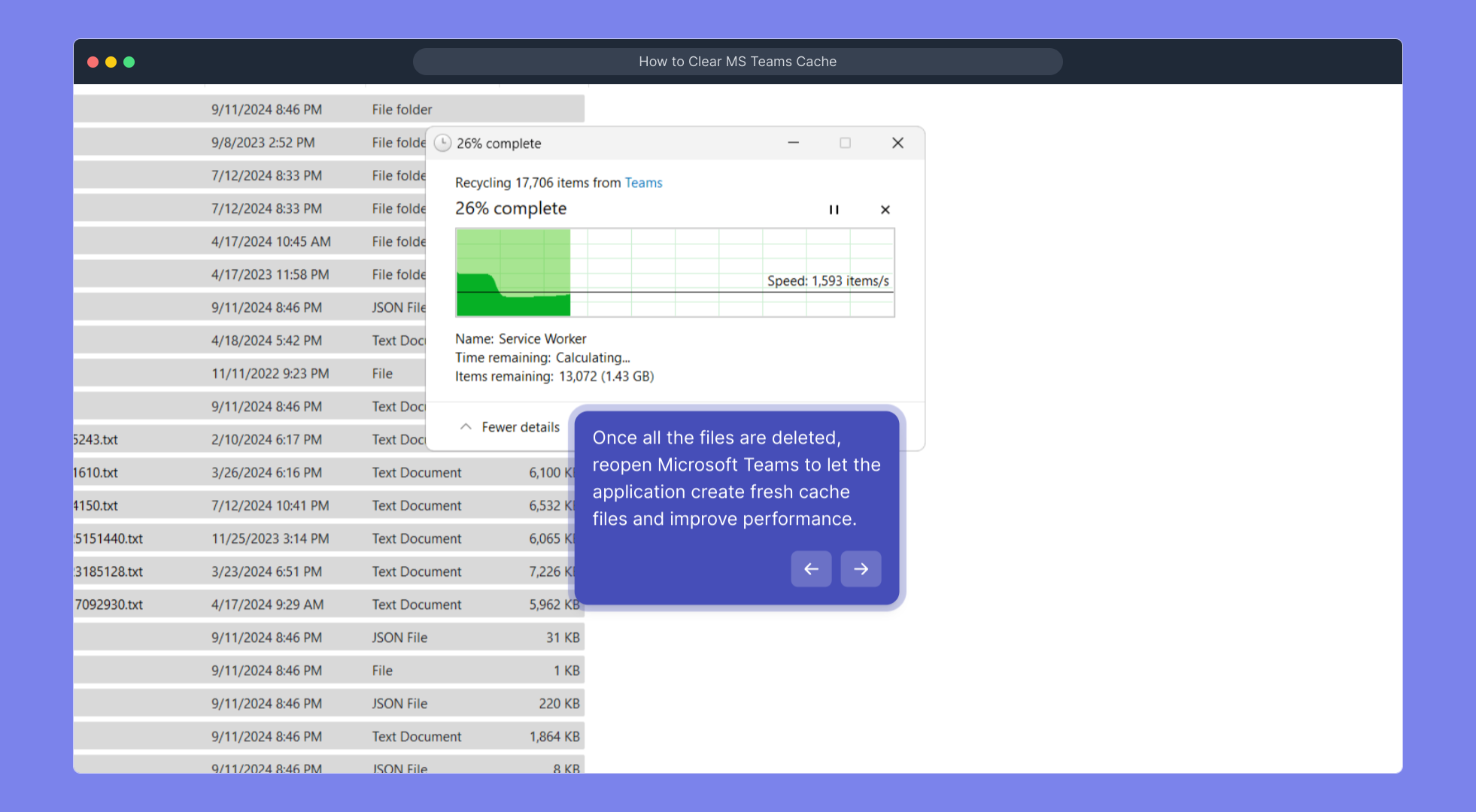
5. Now, delete them by pressing Delete.
6. Once all the files are deleted, reopen Microsoft Teams to let the application create fresh cache files and improve performance.
7. Enjoyed the guided demo?
This interactive demo/guided walkthrough on How to Clear MS Teams Cache was created using Supademo.
How to Clear MS Teams Cache : Step-by-Step Guide
To start, ensure that Microsoft Teams is fully closed on your computer. Sometimes the app continues to run quietly in the background, so take a moment to check your system tray and confirm it’s not active before moving forward.
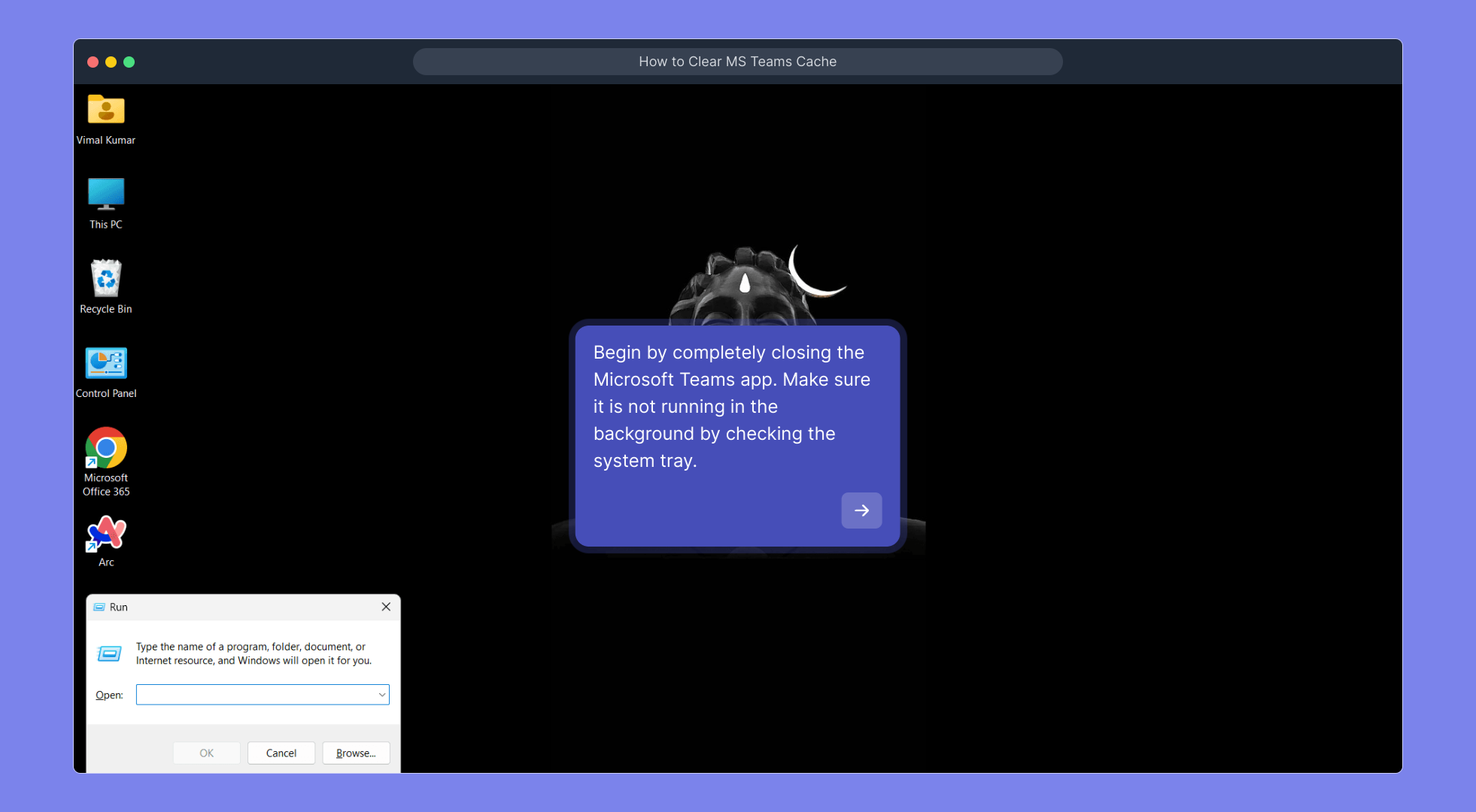
Next, open the Run dialog box to quickly access hidden folders. You can do this by pressing the Windows + R keys simultaneously on your keyboard, which will bring up a small window where you can type commands.

In the Run window, enter the path %appdata%\Microsoft\Teams and press Enter. This will open the specific folder on your computer where Microsoft Teams stores its cache files, which we need to clear.

Once you’re inside the Teams cache folder, select all the items by pressing Ctrl + A on your keyboard. This highlights every file and folder within, preparing them for removal.
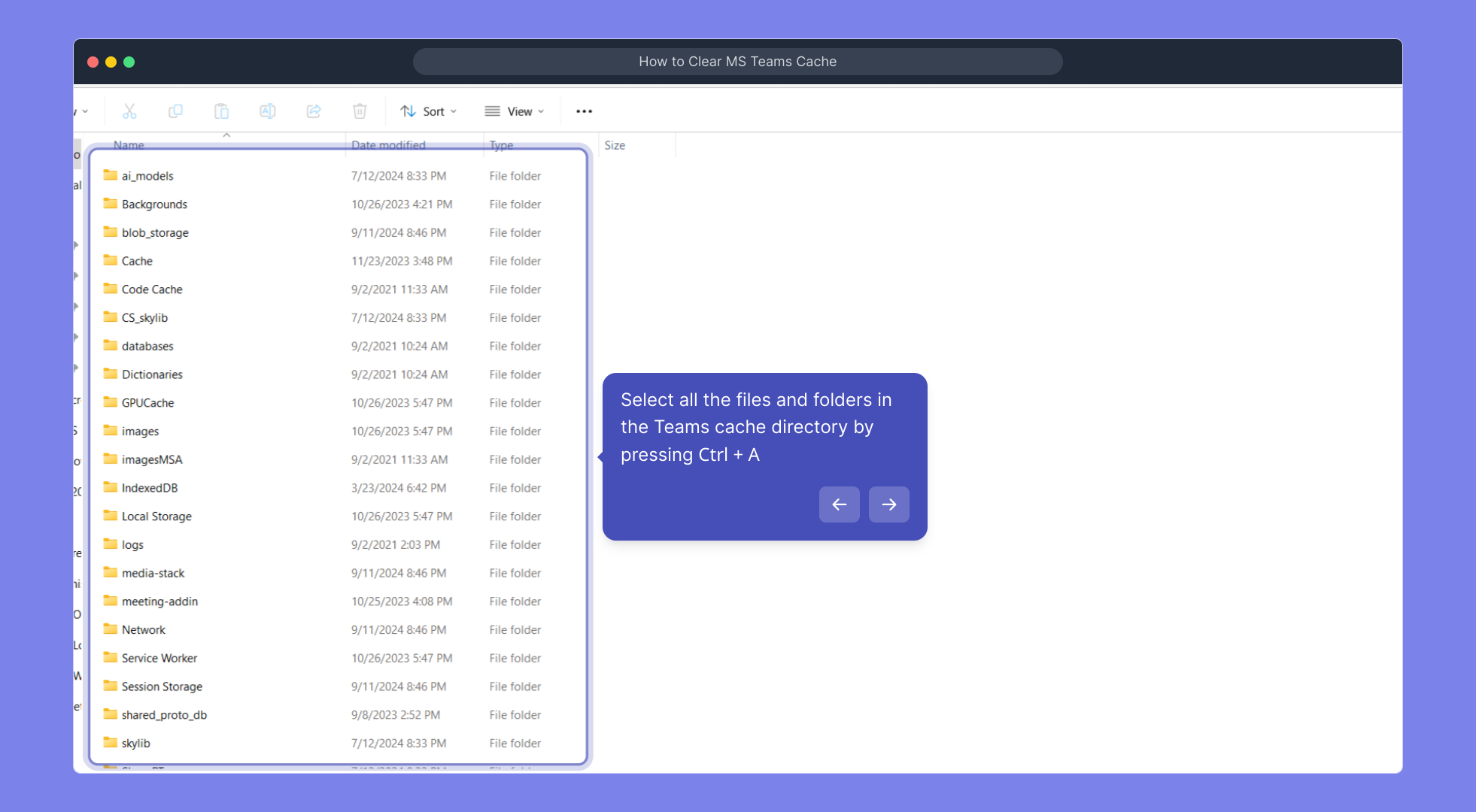
With everything selected, press the Delete key to remove all cached files. Clearing these files will help resolve performance issues by forcing Teams to build fresh data when you reopen it.

Now that the cache is cleared, launch Microsoft Teams again. The app will recreate essential cache files automatically, which can lead to improved speed and stability during your usage.
That’s it! We hope this step-by-step guide made clearing your Teams cache straightforward and easy. If you found this helpful, feel free to explore more demos to enhance your productivity.

Create your own interactive demos in < 5 mins with Supademo
You can create your own interactive product demo in minutes using Supademo. Drive growth, scale enablement, and supercharge product-led onboarding with Supademo. Sign up for free here with no credit card required.
FAQs
Commonly asked questions about this topic.
What does clearing the Microsoft Teams cache do?
Do I lose any data by clearing the Teams cache?
How often should I clear the Microsoft Teams cache?
Will clearing the cache fix login problems in Teams?
Can I clear the Teams cache on Mac or Linux?
Is it necessary to close Teams before clearing the cache?
Where is the Microsoft Teams cache folder located on Windows?
Can clearing cache improve Microsoft Teams performance?
Does clearing Teams cache affect my profile or settings?
What should I do if clearing the cache does not fix Teams issues?

Vimal Kumar
Product Operations Associate
Vimal Kumar helps build and grow Supademo’s team and GTM efforts, with a focus on figuring out growth levers and improving product traction.