Revamp Your User Onboarding: 5 Expert Tips to Boost Activation

A post by Joseph, Co-founder of Supademo.
After co-founding multiple companies and trying out thousands of software products, I’ve learned a ton about what makes a good (and bad) user onboarding experience.
I’ve found that companies often apply a ‘one-size fits all’ approach to onboarding and even overlook its importance during the early days of company building. But I’m here to draw a line in the sand and say onboarding is not an optimization problem you can defer to the scale stage.
Instead, it’s something worth prioritizing from day one.
This is especially pertinent for product-led growth (PLG) companies, who don’t have customer success or sales to readily address concerns, objections, or questions during onboarding.
Luckily, here are five actionable lessons you can apply to your onboarding flow to help supercharge your software onboarding experience:
Lesson 1: Minimize time to value
The goal of product onboarding is to drive users to become better at what your product enables them to do, rather than becoming a better user of your product or service.
For instance, if you’re building a sales prospecting tool — the goal of onboarding is to help convince and empower sales professionals to generate better leads in less time — not maximizing DAU or revenue-per-account metrics, which should naturally follow with alignment.
Hence, your user onboarding should be focused on minimizing the time it takes to provide value to the user — essentially helping them arrive at the “aha” moment of your product.
To achieve this, consider ways to deliver a meaningful, quick win in your onboarding flow — before requiring prospects to putting in too much “work”.
This will increase your odds of both converting and retaining the user, provided your “aha moment” is compelling and aligned with their interests.
Examples of companies doing this well: Gyazo allows users to record and share gifs and screenshots without having an account — while limiting library history and editing to registered accounts;
- SmallPDF users can convert or compress a limited number of files without an account — turning users into advocates and customers once paid use cases comes along;
- Locale AI uses interactive product demos to help users self-educate and understand the value of their features, without a paywall or registration;
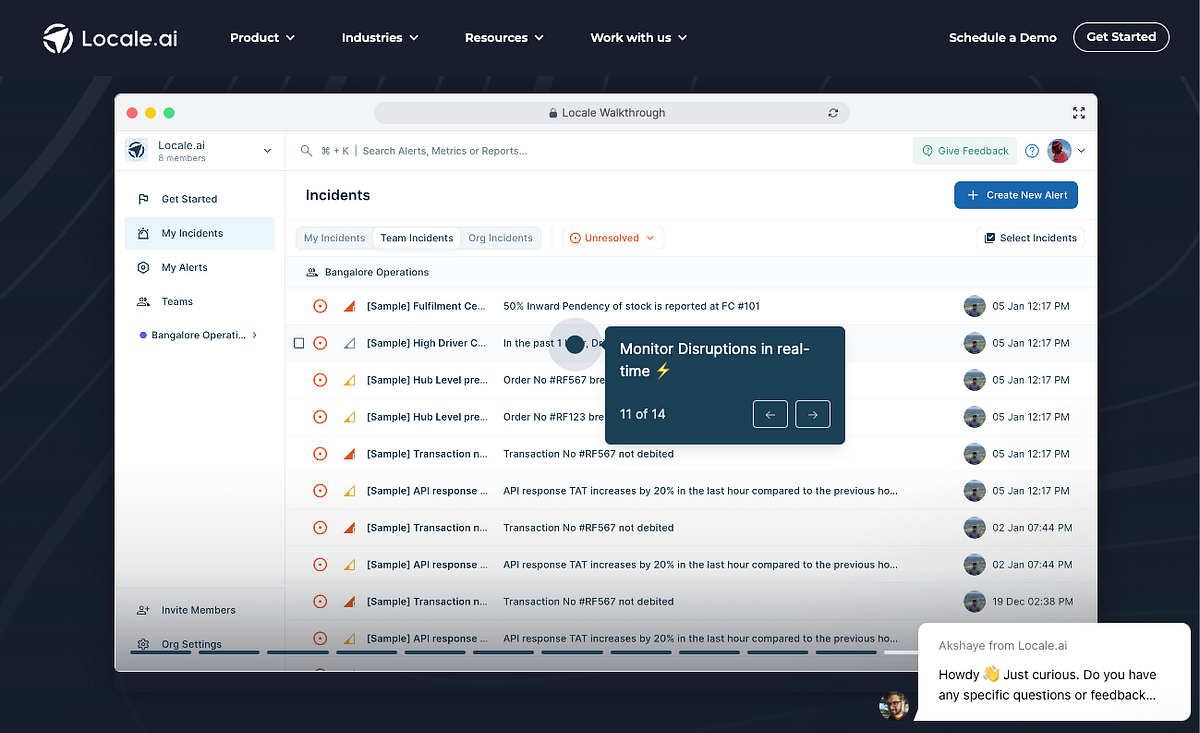
In all three cases, the emphasis is on delivering value in less time, instead of forcing prospects to spend copious amounts of time on learning and training.
Lesson 2: Move unnecessary steps to post-onboarding
Consider deferring time-consuming aspects of registration (i.e. email activation, setup, downloading apps, enabling notifications) to a second step after the initial onboarding process — ideally after the customer has already realized value.
Why? Founders often conflate these users as customers. But they’re not. The users who are in the process of onboarding are prospects for whom you should be putting the best foot forward and trying to impress — not giving them additional tasks to work through.

Specifically, here are several tactics to tweak in conventional onboarding: Move email activation/confirmation emails to post-registration. Forcing users to verify their email as the first task kills the momentum and interest users have in your product. Further, a software purchaser’s inbox is a landmine of distractions. Avoid unnecessary friction and abandonment and you’ll likely see your activation rate jump by 5–10%.
- Reduce the perception of upfront investment that the user needs to endure. Removing technical jargon, fewer fields, and progress indicators (either in the form of steps or showcasing time commitment), can help tremendously.
- Ensure onboarding is action-oriented and not overly informational. In my opinion, this should be owned by marketing and support docs. Cramming too much info into the onboarding process will lead to confusion. Instead, allow customers self-discover non-core features on their own as they start to use your product.
Lesson 3: Onboarding can begin from anywhere
Prepare for this reality by aligning your product and value messaging across your entire organization — across the product, marketing materials, and sales messaging.
Onboarding isn’t confined to your product’s registration page. In fact, it starts at the moment the prospect first interfaces with your company, whether that be an advertisement, sales email, or landing page.
This highlights the importance of having clarity on who you’re targeting, which problems you’re solving, and how your product empowers this intended user.
In this vein — make onboarding a continual experience. Onboarding also isn’t limited to a single point in time. Your product and customers will expand and evolve, so your onboarding should too.
Lesson 4: Tie onboarding to activation goals
As mentioned in Lesson 1, your goal is to minimize time to value and ensure users are reaching your product’s ‘aha moment’ as quickly as possible. If you’re on the ball, you’ll likely tie these ‘aha moments’ to your activation rate goals.
Activation is a specific milestone in your onboarding process that increases the odds that the user will come back and continue using the product.
For my startup, Supademo, a customer is considered activated if they create more than 1 demo and proceed to share it as a link or embed it.
To effectively encourage activation during onboarding, figure out what your company’s activation goals are and ensure you have sufficient prompts, breadcrumbs, or tooltips to induce users to take action towards this goal. But remember to strike a fine balance between persuading customers and nagging!!
Lastly, different segments can have different thresholds and activation goals, depending on the complexity of your product. Consider customizing activation triggers during onboarding to ensure targeted relevancy based on the user profile.
Lesson 5: Stop sending nagging emails

Last but not least — stop sending nagging emails!! Instead of asking users to come back repeatedly, think twice about your email frequency and whether your email content actually adds value, celebrates wins, or helps solve their pain points.
Instead, try tying onboarding emails to trigger based on: Customer action: instead of overloading users with instructions during onboarding, send targeted guides if and when the user interacts with that feature;
- User wins: celebrate moments of success by reaffirming the benefit and sharing with the user;
- Metrics: provide a snapshot of the weekly or monthly platform activities— ideally highlighting how your product is making their lives easier or better as a result of usage;
Getting this right will turn your email marketing into a source of value, instead of something that users instinctively mark as read — or worse, mark as junk 😬.
Some examples of emails that get this right: Medium’s weekly readership summary, which helps users keep a pulse on their writing performance, with reminders to create more content;
- Credit Karma’s notification triggers whenever your credit score changes;
- Spotify Unwrapped, which reaffirms your value and even introduces a social element to it to encourage virality;
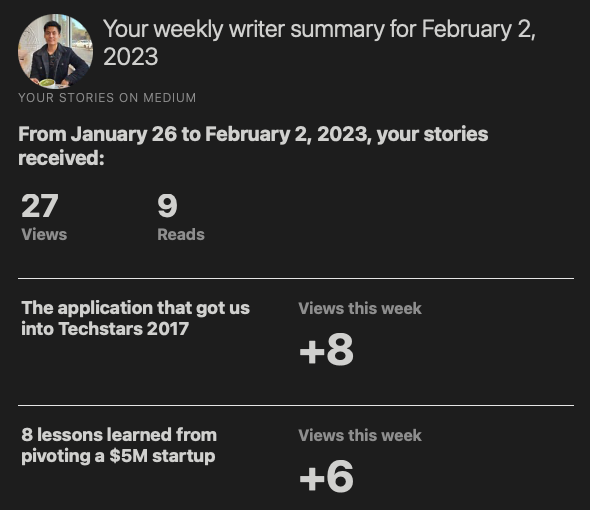
By incorporating some of these best practices and by avoiding common pitfalls, you can create a user onboarding experience that helps users become better at what your product enables them to do.
And your goals, metrics, and overall company performance with benefit alongside it 💯
Frequently Asked Questions about revamp your user onboarding
Commonly asked questions about this topic.
What are the benefits of improving user onboarding?
How can I implement effective onboarding strategies?
What makes onboarding successful for user activation?
Why is streamlined user onboarding important for retention?
How do I measure onboarding effectiveness?
What common onboarding mistakes should I avoid?
How can interactive tutorials enhance the onboarding experience?

Co-Founder & CEO
Joseph is the CEO and co-founder of Supademo, building AI-driven interactive demo tooling used by 200,000+ founders, marketers, and operators to accelerate product understanding and sales. He’s a two-time startup founder passionate about zero-to-one product building and remote-first company culture.