How Tealium turned Supademos into company-wide infrastructure
Tealium standardized Supademo across product launches, presales, events, and personalized web experiences, then extended it with an MCP-powered agent to help govern hundreds of demos at scale.
500+
Interactive demos created
100+
Tealium users
Every launch
Includes a Supademo
- Company size
- 500 to 1,000
- Use Cases
- Product launches, presales enablement, conferences and events, personalized web experiences, AI governance
- Challenges
- Launches that were hard to operationalize, demo quality drift across teams, live-demo dependencies at events, a growing library that was harder to govern
- Outcomes
- 500+ demos, 100+ users, a Supademo in every product launch, an AI agent governing the library through MCP

"Now with Supademo, there's a standard and consistency, and it's a requirement of every PM on the launch checklist."
Tealium helps enterprises turn customer data into real-time action
Tealium is an enterprise customer data platform that helps organizations collect, unify, and activate customer data in real time. As Tealium's product footprint grew, its teams needed a more scalable way to show new capabilities across product launches, customer conversations, events, and tealium.com without rebuilding the same demo experience for every channel.
From scattered demo creation to a repeatable launch standard
Before Supademo, product knowledge at Tealium could take different forms depending on the team or launch: documentation, videos, spreadsheets, live environments, and individually maintained demo flows. That created a few recurring challenges:
- New launches were harder to operationalize. Solutions consultants and other customer-facing teams still needed to learn how a feature worked, configure the right environment, and determine the best way to demonstrate it.
- Demo quality varied across teams. Without one standardized format, product naming, messaging, branding, and the way a workflow was presented could drift over time.
- Live environments created unnecessary dependencies. At events or during customer conversations, the right demo often depended on the right environment, configuration, data, and connectivity being available.
- A growing demo library became harder to govern. As more teams created more content, maintaining permissions, terminology, branding, and organization manually became increasingly difficult.
Supademo gave Tealium a common format for creating, sharing, maintaining, and eventually automating interactive product demos across the organization.
One demo platform, four major workflows
What began as a way to create interactive product walkthroughs has grown into a shared demo layer across multiple Tealium teams.
1. Product launches
Supademo is now part of Tealium's product launch process. When product managers ship a new capability, creating an interactive demo gives internal teams a repeatable way to understand what changed and how the feature should be presented. Instead of each downstream team interpreting a launch independently, the Supademo becomes a reusable reference point for the product experience.
"Every product manager launching a new feature builds out a Supademo, and it goes to the internal teams. On the presales side, we don't have to spend time figuring out how to set it up, how to configure it, or how to demo it."
2. Presales enablement
Interactive demos help Tealium's solutions consultants get familiar with new product capabilities without first recreating the entire workflow themselves. A consultant can step through the experience, understand the intended narrative, and reuse that flow when preparing for customer conversations. That reduces the amount of knowledge that has to be transferred through one-off meetings, documentation, or individually configured demo environments.
3. Conferences and events
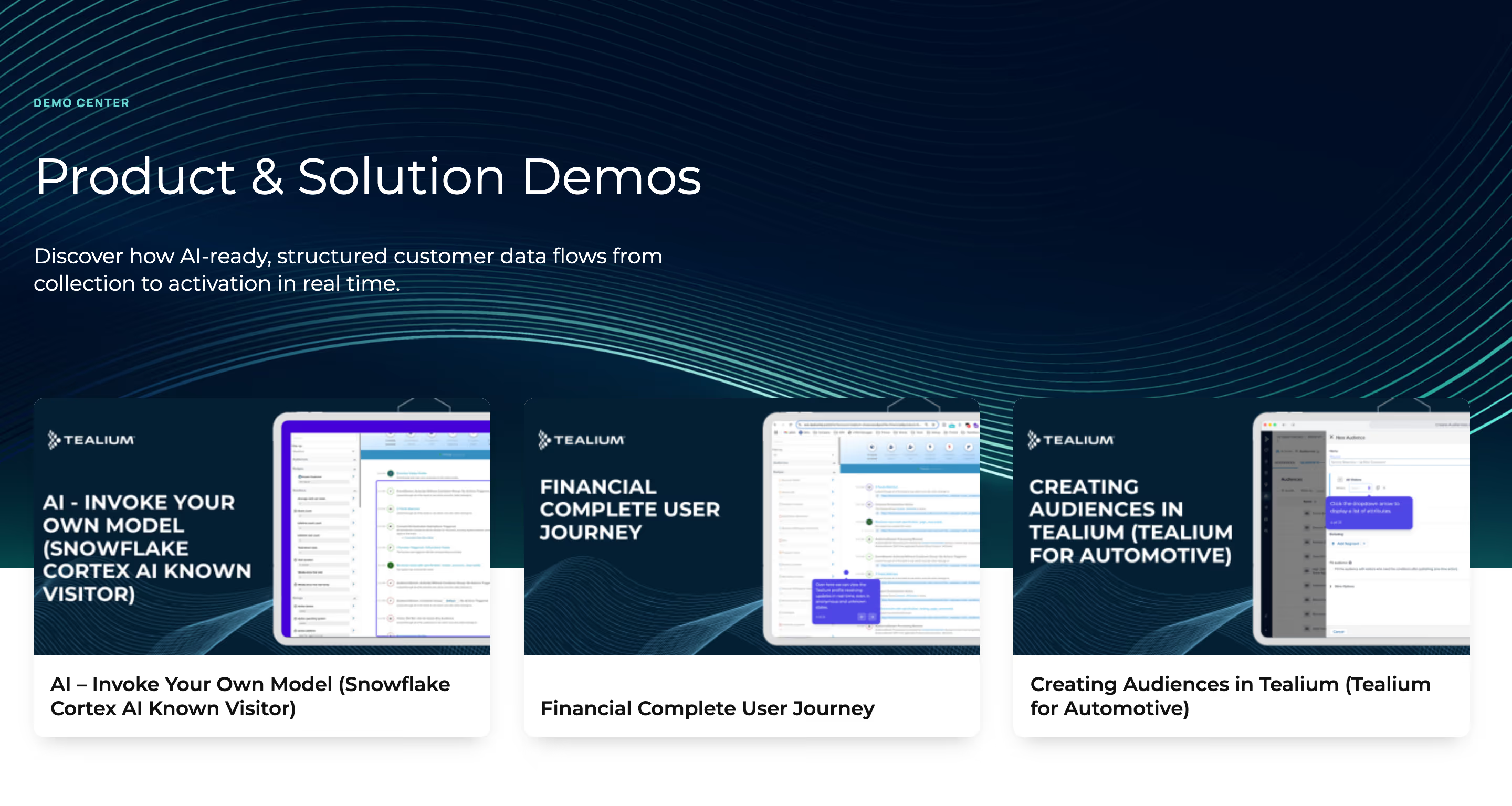
At live events, Tealium teams use Supademo Showcases to make multiple product experiences available from one place. Rather than relying on each person at the booth to maintain the right product environment for every use case, teams can quickly jump between interactive demos depending on what a visitor wants to see. The result is a more repeatable event experience that can be used across different team members, devices, and conversations.

4. Personalized web experiences
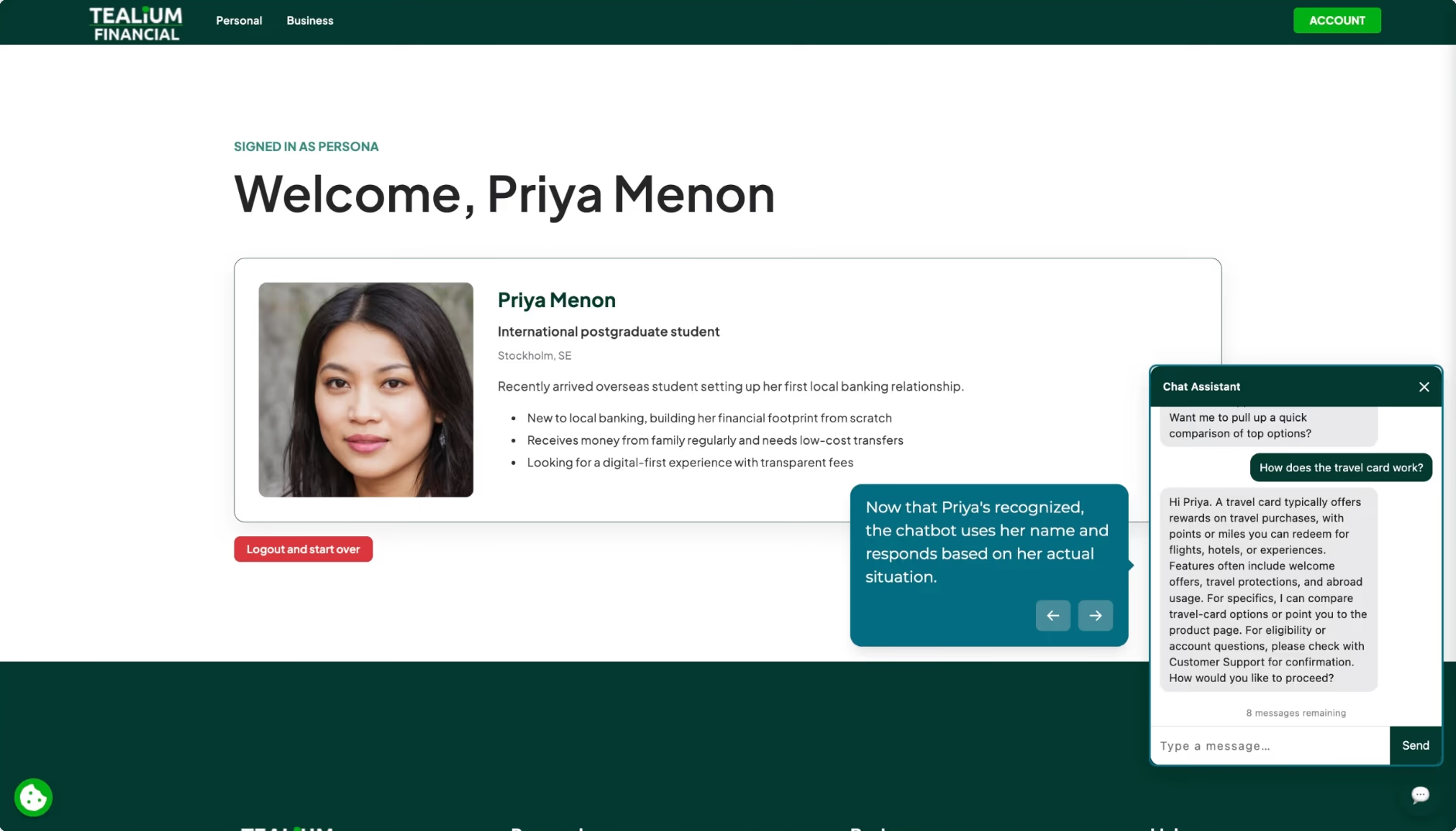
Tealium also makes interactive demos available as part of its website content ecosystem. Visitors can explore self-guided product experiences alongside other Tealium resources, while Tealium's own personalization technology helps surface relevant content based on visitor context and behavior. That turns Supademo from a sales enablement asset into something buyers can discover and explore before ever speaking with a salesperson.
Why Tealium standardized on Supademo
As adoption expanded, four capabilities became especially important.
Fast creation and iteration
Product teams need demo content to keep pace with the product itself. Supademo makes it possible to create an interactive walkthrough quickly, then update individual steps, messaging, branding, or other elements without rebuilding the entire experience from scratch. For Tealium, that makes demos practical enough to become part of the launch process rather than a separate production project.
A format that works across teams
The same underlying Supademo can support product education, presales, events, marketing, and self-guided evaluation. Instead of creating a different asset for each channel, Tealium can reuse interactive product experiences wherever the audience needs them.
Enterprise control and consistency
As Tealium's library grew to hundreds of demos and more than 100 users, governance became just as important as creation. Workspace controls, sharing permissions, branding, organization, and repeatable standards help teams move quickly without giving up consistency.
Programmatic control through MCP
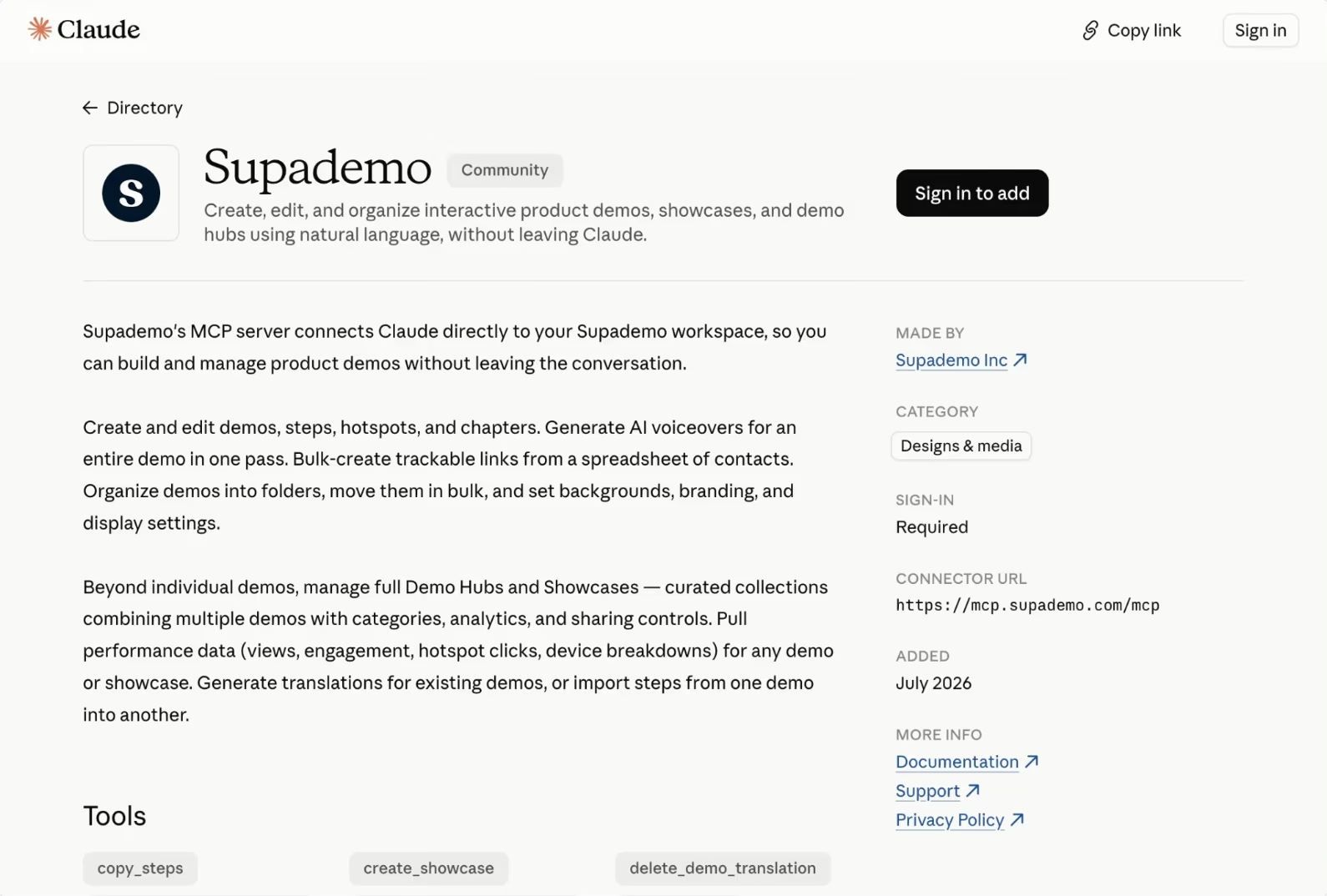
Supademo's Model Context Protocol (MCP) integration gives AI agents programmatic access to demo workflows. For Tealium, that opened the door to going beyond individual demo creation and building its own AI-powered governance system on top of Supademo.
Turning interactive demos into personalized website content
Tealium uses its own technology to personalize the experience on tealium.com based on what it knows about each visitor. Interactive Supademos have become one of the content types that can be surfaced inside that experience. Alongside articles, customer stories, product content, and other resources, visitors can discover self-guided demos that let them experience relevant Tealium workflows directly. This creates a useful loop:
For Tealium, Supademo is the interactive product content layer inside that system. That means a prospect researching a specific Tealium capability can encounter an interactive walkthrough as part of their natural website journey, without needing to request a live demo first.
See how Tealium built its personalized website experience
How Tealium built an AI agent to govern 500+ demos
Creating hundreds of demos introduced a new problem: keeping them all consistent. With more than 100 people using Supademo, Tealium needed a scalable way to identify demos that were incorrectly shared, used outdated terminology, missed branding standards, or otherwise needed attention. Instead of reviewing everything manually, the team built an internal AI workflow on top of Supademo's MCP integration. The agent acts as a governance layer across Tealium's demo library.
- 1
Detect
MCPThe agent identifies newly created or shared Supademos that need to be reviewed.
MCP calls
list_demos - 2
Govern
Tealium standardsIt checks each demo against Tealium-specific standards, including:
- sharing permissions
- branding
- product terminology
- messaging and copy quality
- naming conventions
- internal publishing requirements
MCP calls
get_demoget_workspace_settings - 3
Fix
Notify + MCPWhen something needs attention, the workflow can notify the creator and use Supademo's MCP tools to make approved changes directly to the demo.
MCP calls
update_hotspotsupdate_demo_settings - 4
Organize
MCPOnce demos meet Tealium's standards, they can be classified and organized so the broader library remains easier to search, manage, and reuse.
MCP calls
move_demos - 5
Publish
MCPOnce a demo is approved, the workflow can publish it through the MCP with the right sharing settings, so it is ready for internal teams or for tealium.com without a manual handoff.
MCP calls
publish_demoupdate_demo_settings
The result is a governance model that can scale with the number of demos Tealium creates rather than requiring someone to manually review every asset.
Extending Supademo's AI audit to the organization level
Supademo already includes AI auditing tools that help individual creators improve a demo while they're working on it. Tealium extended that idea through Supademo's MCP integration into an organization-wide workflow tailored to its own brand, product, and publishing standards. Instead of relying only on creators to remember every rule, Tealium is beginning to encode those rules into the systems that manage its demo library.
Under the hood
Tealium's workflow can use Supademo MCP capabilities to retrieve demo information, inspect content and settings, update hotspots and messaging, adjust demo settings, and manage other elements programmatically. This gives Tealium's internal agents many of the same controls a human creator would normally use inside Supademo.
Interactive demos became infrastructure at Tealium
The biggest change at Tealium is that interactive demos became part of how the organization launches, explains, distributes, and governs product knowledge. Today:
- 500+ Supademos have been created across the organization
- 100+ users can create or work with interactive product content
- Product launches include Supademo as part of the launch process
- Presales teams can learn and reuse new product workflows
- Event teams can move between multiple product experiences without relying on a different live setup for each one
- Website visitors can discover self-guided product experiences directly on tealium.com
- AI agents can help audit and govern the demo library through Supademo's MCP integration
What started as a faster way to make product walkthroughs has evolved into a shared layer connecting product, sales, marketing, events, and AI automation.
What's next: personalized demos before the first sales call
Tealium's next opportunity is to make demo experiences even more contextual. Instead of showing every prospect the same generic flow, account and visitor context could help determine which product story, use case, or workflow is most relevant before a salesperson ever joins the conversation. That could mean generating or assembling demo experiences based on signals such as industry, account, role, known interests, or previous engagement. The goal is a first conversation that starts further ahead.
"People don't want to get on a call with a vendor for a sales pitch. But if I can say, here's the challenge we think you have, here's the custom demo, do you want to take a call with us? That is very interesting."
For Tealium, that represents the next stage of the same evolution: from manually created demos, to standardized demos, to governed demos, and eventually to product experiences assembled dynamically around each buyer.
Scale interactive demos across your enterprise
Give product, sales, marketing, customer success, and enablement teams one platform to create, govern, and distribute interactive product experiences at scale.
FAQs
Commonly asked questions about Supademo. Have other questions? Reach out and our team will be happy to help.
Tealium uses Supademo across product launches, presales enablement, events, and its website. More than 100 Tealium users have created over 500 interactive demos, and Supademo has become part of the company's product launch process.
Tealium combines workspace standards with an internal AI governance workflow built using Supademo's MCP integration. The workflow can identify demos that need review, check them against Tealium-specific rules, notify creators, and programmatically update approved elements.
Yes. Supademo's MCP integration gives compatible AI agents access to demo-related tools for retrieving information and programmatically modifying elements of a Supademo. Tealium uses these capabilities as part of an internal workflow for governing its growing demo library.
A Supademo is a required item on Tealium's product launch checklist. When a product manager ships a feature, they build an interactive walkthrough of it and share it with internal teams. Elizabeth Marshall, Global Vice President of Solutions Consulting, says that means presales no longer has to spend time "figuring out how to set it up, how to configure it, or how to demo it."
At Tealium, solutions consultants step through the Supademo a product manager built for the launch. They learn the workflow and the story the product team wants told, then reuse that flow to prepare for customer conversations, without first rebuilding the feature in a demo environment.
Tealium teams use Supademo Showcases to put several product demos in one place at events. Booth staff switch between demos based on what each visitor wants to see, so no one has to keep a live environment configured for every use case, and the setup works the same for every team member and device.
Tealium publishes self-guided Supademos in its Demo Center on tealium.com. Tealium's own personalization technology also surfaces relevant demos alongside articles and customer stories based on visitor context and behavior, so a prospect researching a capability can try it before asking for a live demo.
The agent reviews each new or shared Supademo against Tealium's standards for sharing permissions, branding, product terminology, messaging and copy quality, naming conventions, and internal publishing requirements. Through Supademo's MCP tools, it can notify the creator, apply approved fixes, organize the demo in the library, and publish it with the right sharing settings.
Tealium is exploring it. The idea is to assemble a demo from account and visitor signals such as industry, role, known interests, and previous engagement, so a prospect sees a relevant product story before a salesperson joins. As Elizabeth Marshall puts it: "If I can say, here's the challenge we think you have, here's the custom demo, do you want to take a call with us? That is very interesting."