I got a lot of the CTO transition wrong at first. When you’re a technical co-founder, building things yourself is what got you here. It’s easy to keep doing that job even after the team needs something else from you.
We grew Supademo from zero to $5 million in ARR with a team of eight engineers. These are seven things I wish I’d understood earlier. Some took me years, and a couple I’m still fighting with.
1. Make fewer things depend on you
This was the hardest adjustment because it’s about identity. You got here by being the person who could build it. As CTO, your value increasingly comes from the output of the team and the AI agents working alongside them.
Your day might once have been one deep problem, four hours, headphones on. Now you might have two engineers, a couple of agents, and a customer issue all needing attention. Each workstream needs enough clarity to run for a day without you in the middle.
If everything routes through you, you’re the bottleneck with a better title. Write the requirements, review more than you build, and let someone else ship the big feature. You can still code while making a deliberate effort to reduce how much work depends on you personally.

2. Choose boring technology
The stack you’d pick for fun is a tax your future team pays. The bar I’d set is that a new engineer can ship a feature end to end in their second week. If the stack makes that impossible, I’d start by looking at the choices we made.
In practice, that means one language across the stack where possible and managed services for things that aren’t the product itself. I’m conservative about new frameworks. If one came out last spring, I’m happy to let someone else find the bugs.
The exception is the piece that makes your product what it is. Go deep there. You don’t need the same level of custom engineering everywhere else.
3. Automate the work your small team keeps repeating
It’s easy to overengineer for traffic you don’t have. I’d rather put early engineering time into work that helps the current team get more done.
That might be automated data triage, one-click deploys, or internal tools that let support fix an issue without waiting for an engineer. It could also be an MCP server that lets customers do more for themselves.
The automation you build in year one can still be doing the work in year three. A useful Friday habit is to ask the team what consumed their time that week that a script could have handled. Pick something from that list and build it.
4. Read the support inbox yourself
Hand support off when you can, but keep a direct connection to the tickets. I’d reserve 20 minutes every Monday to read the actual words customers use.
A summary can smooth over the details you need. Look for an underlying problem that several customers describe in different ways. Those reports may be pointing to the same confusing behavior in the product, even if they arrive as separate bugs or questions.
As CTO, you make decisions about what the team builds and fixes. Reading the raw feedback gives you a better basis for those decisions.
5. Archive stale ideas and keep a short list of paper cuts
A backlog can turn into a graveyard. Every idea anyone ever had goes in, and almost nothing comes out. Then the team spends a meeting refining estimates for tickets that will never ship.
Every quarter, I’d archive ideas nobody has touched in months. Keep open bugs, security work, and customer promises. Those are obligations that still need attention. An old idea can come back if it matters again.
Alongside that, keep one small list of paper cuts: the little annoyances customers mention in passing. Ship a batch every month. There’s plenty of useful work in those details without adding another big feature nobody has asked for.
6. Tell people what the team shipped
Engineers can ship a feature and move straight to the next ticket. Meanwhile, customers and people elsewhere in the company may have no idea it exists.
Try asking someone outside engineering what the team shipped last quarter. If they struggle to answer, look at how those releases were communicated.
Match the communication to the size of the release. A bug fix can get a line in the changelog. A substantial feature deserves a post, an email, and a message to the whole team. Get the explanation out while the work is still fresh. It doesn’t need to be polished to be useful.
7. Give engineers room to try AI tools, and keep reviewing code
Technical founders can make AI adoption harder in two directions. Lock everything down over cost and engineers may use personal accounts without telling you. Add AI everywhere without review and you can end up debugging generated code in production at 2 a.m.
I’ve landed on giving engineers access to the tools and models so they can figure out what helps. I don’t want an approval form to be the first thing between an engineer and an experiment. Once we can see what’s being used, we can look at the bill.
The rule that stays is that whatever goes to production still gets reviewed. Giving people room to experiment and reviewing what they ship are both part of the job.
Pick one of these habits to try this week. Give someone else ownership of the next feature, spend 20 minutes in the support inbox, or automate the task that keeps interrupting the team. See what changes before adding another process.
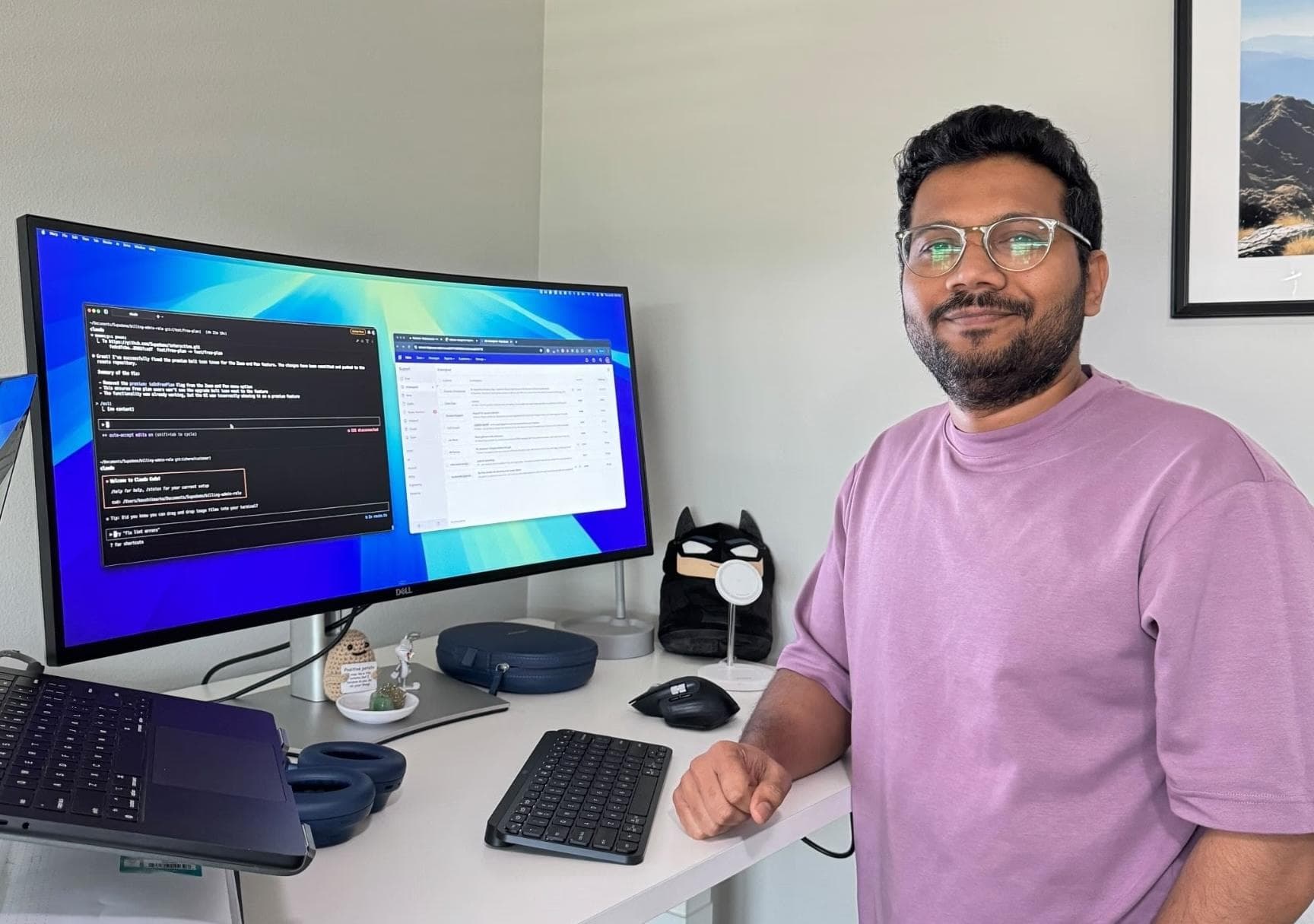
Co-Founder & CTO
Koushik co-founded Supademo after years of experience running a creative agency, bringing deep product, design, and engineering expertise to help shape Supademo’s vision and build its core platform. He leads technical execution and product strategy.